Saturday, 21 October 2023
Team Feedback on Maths Programme and Team collaboration this year
Thursday, 28 September 2023
Monitoring the Effects: Term 3 e-asTTle Comparison Reports (Maths)
In this post, I'd like to share two e-asTTle comparison reports based on the latest assessment conducted in September by my Year 3 and 4 students. I have nine Year 4 students in my class but only two of them didn't sit this test due to their overall learning difficulties (they focus on their IEP goals). There is no e-asttle data available for Year 3 students from other schools.
Using the concept of repeated measures, I've been tracking my students' progress in maths and sharing their results with both them and their whanau. We looked at their individual reports to set up new goals and to see how far they've come and how much they've grown. It was a great opportunity for my learners to talk about their successes and next steps during our end of Term 3 Tamariki Korero.
Report #1. How are my students doing compared to students in ALL other NZ schools?
Report #2. How are my students doing compared to students in SIMILAR schools (low decile)?
E-asTTle offers a range of individual and group reports that I've been using as formative and summative assessments to guide my students toward their learning success. Along with other assessments, I use e-asttle to keep a close eye on student progress and needs and to make teaching adjustments as needed.
Next year, I will administer the same test at the beginning of Term 1 and then each term to collect data for e-asTTle progress reports and to compare them with PAT results (out of my personal curiosity).
Thursday, 25 May 2023
Literature review #2 - Transfer of Learning by R. Haskell
Haskell, Robert. Transfer of Learning.
Dr. Robert E. Haskell was a Professor of psychology at the University of New England (passes away in 2010), whose work in the area of learning transfer spans a range of disciplines, including math, science, education, business, and psychology.
Haskell's insightful book, 'Transfer of Learning: Cognition, Instruction, and Reasoning,' explores the interesting topic of how we can effectively apply our knowledge in diverse contexts. By exploring the historical roots of transfer and underscoring the importance of building a solid knowledge foundation, Haskell convincingly argues for the significance of explicit teaching and practice. emphasizes the importance of understanding key concepts, strategies, and declarative knowledge in facilitating successful knowledge transfer. The book provides valuable insights on fostering critical thinking and problem-solving skills in students, empowering them to apply their learning to real-world situations.
Just in case, I'd like to explain that declarative knowledge in math involves knowing and understanding the key ideas and concepts that form the foundation of mathematical thinking and problem-solving. It is like the building blocks of learning, providing a solid foundation for further learning, deeper understanding and the ability to apply what you know.
In conclusion, Haskell's work aligns with my belief about the importance of teaching before testing. By emphasizing the need for a strong knowledge base and providing students with explicit instruction, educators can empower students to transfer their learning effectively. Teaching before testing ensures that students have the necessary understanding and skills to approach assessments with confidence. By incorporating Haskell's insights into our teaching practices, we can create a solid foundation for students' academic success and foster their ability to apply their knowledge in real-world contexts.
Thursday, 18 May 2023
Literature review #1 - Visible Learning by J. Hattie
John Hattie is a Professor of Education and Director of the Visible Learning Labs, University of Auckland, New Zealand and we all know his famous work "Visible Learning. A Synthesis of Over 800 Meta-Analyses Relating to Achievement" first published in 2009.
I decided to reread his book, especially some parts that I found important for my teaching inquiry this year. According to J Hattie, "The effect size of 0.40 sets a level where the effects of innovation enhance achievement in such a way that we can notice real-world differences, and this should be a benchmark of such real-world change."
This is a great reminder to all of us that our inquiry into improving our teaching practice, commitment to numerous PLDs, and our aim to develop student agency are vital components in fostering positive student outcomes in mathematics. By focusing on refining the curriculum and our instructional skills as teachers, and prioritizing student engagement and empowerment, we have the potential to make a profound impact on students' mathematical understanding and achievement.This research also provides valuable insights into instructional strategies that yield positive results for student learning. When it comes to teaching math, a well-structured program and direct teacher instruction have been found highly effective factors (Hiebert & Grouws, 2007). Explicit teaching, clear explanations, and demonstrations have a significant impact on student understanding and achievement.
Manipulatives play a crucial role in the early years of mathematics education and show a great effect when working with low-achieving middle school students. They provide concrete experiences that help students build a solid foundation and develop a deep understanding of mathematical concepts (Mitchell, 1987). By engaging students in hands-on activities, manipulatives foster conceptual understanding and lay the groundwork for later abstract thinking.
When it comes to effective teaching strategies, certain approaches have shown particularly promising outcomes. Strategy-based methods, guided practice, peer tutoring, teacher modeling, specific forms of feedback, mastery criteria, sequencing examples, and instruction responsive to feedback have demonstrated high effect sizes (Hattie, 2009). These strategies actively engage students, provide guidance, and create opportunities for practice and feedback, leading to significant improvements in mathematics achievement.
On the other hand, research suggests that peer group strategies and independent practice with technology have relatively lower effect sizes (Hattie, 2009). While they still have some value, working within a peer group and relying heavily on technology for independent practice may not yield as substantial improvements in mathematics learning compared to other approaches. (I have personally observed similar situations where students collaborate on their independent activities, and despite my reminders that they should only help by explaining rather than telling, it can be challenging to monitor.)
Reading "Visible Learning" by J. Hattie confirmed my hunch and hypotheses about the most important and effective components of teaching mathematics:
- Structured mathematics programs: Comprehensive and organized curricula that provide a framework for effective instruction and learning in mathematics.
- Direct Teacher instruction and modelling: Engaging students through clear explanations, demonstrations, and guidance from the teacher to deepen their understanding of mathematical concepts.
- Strategy-based methods: Teaching students specific problem-solving strategies and approaches to empower them in tackling mathematical tasks effectively.
- Guided practice and feedback: Providing students with opportunities to apply their knowledge through practice activities while receiving targeted feedback to enhance their learning and mastery of mathematical skills.
Citations:
Hiebert, J., & Grouws, D. A. (2007). The effects of classroom mathematics teaching on students' learning. In F. K. Lester Jr. (Ed.), Second Handbook of Research on Mathematics Teaching and Learning (Vol. 2, pp. 371-404). Information Age Publishing.
Mitchell, M. M. (1987). The effects of manipulative materials in mathematics instruction. Journal for Research in Mathematics Education, 18(6), 449-457.
Hattie, J. (2009). Visible Learning: A Synthesis of Over 800 Meta-Analyses Relating to Achievement. Routledge.
Friday, 5 May 2023
Formulating my Hypothesis to improve teaching of Maths
Based on my previous TAI steps, I identified the following most important hunches for my inquiry:
will improve students' learning outcomes and enhance their learning experiences.
Reevaluating and adjusting my, my team's maths programme to include all the effective elements of the maths programme (research based): number talk, targeted teaching sessions, teacher designed consolidation activities, independent activities and opportunities to apply their knowledge and create in maths (rich tasks and investigations).
By unpacking the term 1 results with students, educators can help them understand their strengths and weaknesses and take ownership of their learning.
Taking a more data-driven approach by consistently using formative (and summative) assessment tools to inform our teaching.
Training students to self-assess using Maths Matrices to help them identify areas where they need additional support and extra practice. By providing students with the tools they need to support their own learning, educators can help to foster a sense of agency and responsibility in their students.
Teacher collaboration and data sharing are essential in Maths education. By working together and sharing data, educators can identify areas for improvement, set goals, create and share resources, and adjust their teaching practices to improve student outcomes.
Thursday, 27 April 2023
Food for Thought or Just One PAT Question Analysed
After publishing my post about PATs areas that we test on without teaching, I recalled and decided to share a story about my last year Y4 student who scored Stanine 9 in PAT but struggled with one particular question - "Visualise which shape a net will fold to make."
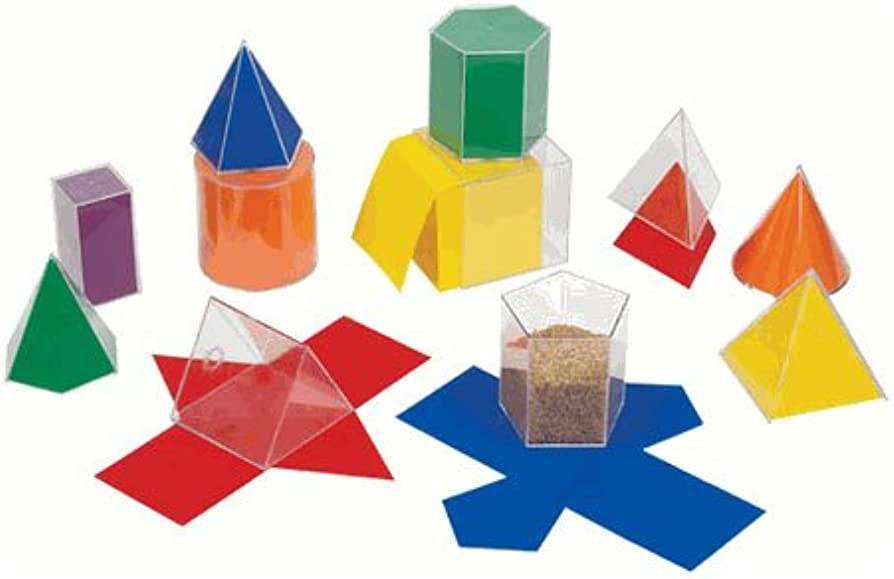
At that time, I was placing an order to buy more maths resources for our school including a set of 3D folding shapes, which we used with our Year 3-4 classes. I wanted to provide our students with a hands-on way to explore and visualize 3D shapes and their nets. Little did I know that this tool would have a significant impact on their learning, even a year after using it. Surely, you can fold 3D shapes using paper, but we had an opportunity to purchase this maths equipment and students loved it!
Out of curiosity, I looked at random Y4 and Y5 classes to find out their answers to this particular PAT question for the past 3 years.
2020 - Term 4
2021 - Term 4
2022 - Term 1
2022 - Term 4 - our Team excelled in the PAT "visualise a shape" question that had previously stumped many of Year 4 and 5 students.
2023 Term 1 (after the summer break, mostly the same students with some new intakes)
"Visualize which shape a net will fold to make." This question could be challenging for some students because of a specific skill we often do not cover in our maths programme.
As seen from the examples above, after using the folding shapes in our team, students were able to visualize the 3D shapes and their nets with ease. They were able to apply their knowledge to the PAT assessment and, in Term 4 2022 for the first time in three years, most of Team Kea's students answered the question correctly. Furthermore, the majority of learners retained their knowledge after a summer break (this is not clean data as we have a number of new students from other schools and teams).
This set of data highlights the importance of analyzing assessment data to identify areas where our students need explicit teaching or additional support.
Wednesday, 22 March 2023
Refining my TAI (What, How, Why) - Focus on Design and Assessment for Learning
1. Design for Learning in mathematics involves creating a comprehensive plan or roadmap for teaching and learning mathematics. This design should consider the specific needs of the students and align with the NZC.
I believe that mapping an effective maths program should include clear learning objectives, a scope and sequence, lesson plans and resources, PLDs for teachers, and monitoring student progress using formative and summative assessments.
2. Assessment for learning (AfL) is a critical aspect of teaching mathematics in primary schools. It involves a process of ongoing evaluation and feedback to help students understand:
- what they have learnt,
- what they need to improve
- how to achieve their learning goals.
In the context of mathematics, AfL is particularly important because it allows teachers to identify areas where students are struggling and tailor their teaching to meet individual needs.
I discussed my 2023 inquiry focus with a number of leaders and teachers at my school and was impressed by their responses. I'm ready to embark on a new challenge and thrilled to be doing so with the GTS collaborative team.
Evidence of Improving Teacher practice and Student achievement in Mathematics in GTS
In 2021 I analysed our school data in Maths and raised my concerns with the management. I was thrilled that my voice was heard! This initiative led to a school-wide collaborative inquiry into improving the teaching of mathematics. Last year, we took this inquiry to the next level. After reviewing school Maths Matrices, we focused on two powerful areas: teacher practice and student agency. That meant that we needed to give students both the option to make choices to direct their own learning and the information they needed to make strong choices. Interestingly enough, after unpacking Maths matrices with their students, our teachers began to use these Matrices for their planning.
Thanks to Johanna's (DP at GTS) data analysis before and after this intervention, we can provide clear evidence of the positive impact of this collaborative approach.
Thursday, 17 November 2022
Team Feedback on Collaboration and Its Impact on Raising Student Achievement in Maths
As part of the evaluation of my 2022 inquiry, I collected teacher voice asking them to reflect on our collaborative journey this year:
Did collaborative planning help you deepen your MATHS curriculum knowledge and better understand progressions (stages)?
- Yes, with having to plan all different stages it deepened my knowledge of the progressions as well as the curriculum. I was able to look at what my team had planned which allowed me to have access to more resources. Before we started collaboratively planning I noticed that I was planning too high for stages 2-3, now I understand the level that they are at and can see a big shift in their progress.
- Definitely! I am an experienced teacher, who knows how to teach. However, as an overseas teacher, I struggled to understand the different stages and especially how to plan for each stage (and how to know when the students should move on to the next stage)....
Did team planning help you feel more comfortable and confident teaching Maths?
- Absolutely. Now I feel so much more confident teaching maths, I really enjoy it. It took me some time to get used to teaching off others' plans. But once we spoke about using the same template that helped a lot more.
- The best thing about this whole experience was that I never felt judged, criticized or as a failed teacher. I loved that I could bounce ideas off from my colleagues, that I was able to ask for advice in a safe space and that I was mentored.
Did using different maths manipulatives help you teach and your students learn Maths concepts better?
- Using different math manipulatives and hands-on activities gave my students more of an understanding of different concepts. I will never teach without manipulatives now. It also makes the students more engaged with their learning. I find that my students are actually excited to learn about maths now and really enjoy it!
- Do you feel that you can scaffold your students' learning? What helped you achieve this?
- Yes, I feel like my students are able to get the correct teaching and guidance to improve in maths. As I have more content knowledge from the collaborative planning I am able to recognise my students' strengths and weaknesses and improve/ build on them.
- Yes, it is incorporated in our plans. Instead of doing a massive lesson about a new concept, we break it up into smaller chunks and give them time to practice the new skill or concept. Once they are familiar and confident we move on to the next part/phase of the concept.
What do you like about our collaborative planning and the changes that we made this year? What can be improved next year?
- We often reflect back on what worked well and what didn’t, which improved our planning and teaching (since we learn from our mistakes). Open communication in the team has been KEY (this is extremely important when planning and working together). I have learned so much from my two colleagues. Due to the fact that we have different teaching styles and different personalities, my own teaching practice has improved. I love that we are comfortable to ask each other for advice, that we can support each other and help each other grow. I honestly felt like we shared the load and that I was never alone... He waka eke noa.
Wednesday, 21 September 2022
Student Agency Readings - LCS and the integrated curriculum
Student inquiry is a teacher-supported process that provides a structure for students to learn through the process of inquiring into questions they develop themselves about a topic or concept. There are various models of student inquiry and I reviewed and reflected on a number of different models.
Interesting Points
The LCS approach to learning is based on the belief that students are powerful learners who must be actively engaged in the process of investigating, processing, organising, synthesising, refining and extending their knowledge within a topic. They also are able to work collaboratively and develop their key competencies while working on their LCS projects.
Teachers have to provide a clear structure and share their expectations of student learning. To make this process purposeful and enjoyable, teachers have to put a lot of effort into planning and collecting student voice.
Another interesting point that resonated with my view of the LCS process is the use of an integrated curriculum. Such an approach gives students a real purpose for learning and provides real-life experiences which in order help students see the world as a complex system rather than a number of separated topics. "The coherence principle states that “the curriculum offers all students a broad education that makes links within and across learning areas”
(Ministry of Education, 2007, p. 9, emphasis added)
The LCS (or inquiry) learning supports the development of students' critical thinking.
Concerns I have from within the reading
From my own experience, I know that LCS requires a high level of organisation, flexibility and negotiation skills to challenge the range of diverse learners. It requires a lot of careful planning and structured delivery. LCS can be messy and noisy due to the students' enthusiasm and drive.
My concern is mostly about inquiry learning in the ILE. Teachers have to be on the same page with their expectations and standards and have a high level of trust between them and learners.
New learning from this reading
It was interesting to read about different models and approaches to inquiry learning. Different schools and teachers use different models that suit them, their beliefs and their learners. It was great to see various rubrics for teachers to measure the quality of inquiry learning and outcomes. We used some of these ideas when working on the Team Kea LCS model.
What excites and enthuses me from this reading?
I personally love the integrated learning and LCS approach as I see these as great opportunities for students to learn in an authentic context, not to mention their enthusiasm and motivation! I believe that the LCS approach takes students beyond what they already know and supports the development of important lifelong skills and key competencies.
Reflection
The more knowledge we have about inquiry learning, the better our common understanding of all aspects of LCS becomes. I actually was excited to see that my team's understandings of the LCS process are pretty similar. I believe this is a result of our close teamwork and collaboration.
Thinking about my learners, I believe that during inquiry learning, peer learning becomes as effective as teacher-led learning. Some meaningful “aha!” moments often come in authentic interactions with other students. Sometimes, during the LCS projects, the class transforms into a space where everyone can try different roles: a teacher, a facilitator, a leader, an IT guru etc and has something to share! Inquiry-based learning triggers students' critical thinking and problem-solving capacities and pushes them to take action instead of learning passively.
It was great to have these readings done before and during our work on the Team Kea LCS model as we kept referring to different ideas and models and synthesized them into our own pilot LCS model that we are excited to implement in term 4.
Readings:
http://pjsibpyp.weebly.com/uploads/1/1/2/3/11231090/inquirymurdochwilson.pdf
http://pjsibpyp.weebly.com/uploads/1/1/2/3/11231090/kath_murdochs_inquiry_model.pdf This has awesome components for students to know what they should be doing / working through that you can add to Learn, Create, Share
https://www.nzcer.org.nz/system/files/set2012_3_015.pdf This reading is more of an academic read, but gives great information.
Monday, 22 August 2022
Monitoring the Effects of Teacher Collaboration in my Team on Learner Outcomes
Identify informal and formal ways you are monitoring the effects of your changed practices/intervention on learner outcomes. Explain the reflections and tweaks you are making along the way.
Sunday, 10 July 2022
Fluency Without Fear: Research Evidence on the Best Ways to Learn Math Facts By Jo Boaler
Fluency Without Fear: Research Evidence on the Best Ways to Learn Math Facts by Jo Boaler (2015)
Found a few years ago during my ALiM work, I keep referring back to this article and https://www.youcubed.org/ website. This work is about developing number sense instead of memorization of facts, it unpacks the idea of learning math facts along with a deep understanding of numbers and the ways they relate to each other.
In a critical research project, researchers studied students as they solved number problems (Gray & Tall, 1994). The researchers concluded that low achievers are often low achievers not because they know less but because they don’t use numbers flexibly – they have been set on the wrong path, often from an early age, of trying to memorize methods instead of interacting with numbers flexibly (Boaler, 2009).
Based on my experience, some teachers want their students to drill in basic facts and times tables as this is 'a good old school that worked well in the past'. Saying that we don't really have any research data to support this statement. I remember a lot of my classmates who hated maths because they didn't understand it or had to sit timed tests. I was one of them and I didn't enjoy that 'good old school' approach.
I believe that the current decline in student achievement in maths is caused by a lack of maintenance or an unbalanced or inconsistent maths programme.
- Do we all have a solid maths block every day four or five times a week?
- Do our students practise and apply the knowledge and concepts taught in class or just do some busy work during their independent activities?
- How can they develop fluency without mileage and purposefully created and provided opportunities?
Thursday, 30 June 2022
Learning about Collaboration from Literature
My hypothesis is that a collaborative approach during group and independent learning activities might increase student engagement and develop a better understanding of topics or concepts and their practical application.
Research shows that collaborative group work involves students working jointly on the same problem at all times. Within a collaborative group, decisions are shared and the negotiation of roles and relationships constantly evolves. Such a collaborative approach to learning is linked to Vygotskian ideas such as situated cognition, scaffolding, and the zone of proximal development (Forman & Cazden, 1985).

Jo says that collaboration is vital for learning, brain development, and creating equitable outcomes. I agree with her; however, first of all, it is important to establish interpersonal connections. I noticed that some of my learners are happy working together and they achieve better results than a group that keeps arguing without listening to each other's ideas. Hence, teachers need to spend more time creating positive norms for collaborative groups.
Emily R. Lai (June 2011) in her Pearson Research report states that "Collaborative interactions are characterized by shared goals, symmetry of structure, and a high degree of negotiation, interactivity, and interdependence. Interactions producing elaborated explanations are particularly valuable for improving student learning. Nonresponsive feedback, on the other hand, can be detrimental to student learning in collaborative situations. Collaboration can have powerful effects on student learning, particularly for low-achieving students. However, a number of factors may moderate the impact of collaboration on student learning, including student characteristics, group composition, and task characteristics."This resonates with me and my own experiences and shows that student collaboration requires a lot of teacher thinking and designing in creating tasks, forming groups and again, setting up class positive norms. Teachers need to carefully consider group composition in terms of gender and ability when using collaborative learning. Simple tasks with one correct solution that can easily be solved by a single, competent group member should not be used in collaborative settings. Even if not all young students will be able to collaborate effectively in their early school years, they will definitely start to develop such important habits required in older classes and in life in general.
Another important idea I confirmed during my professional reading is that collaboration is not the only powerful approach to learning and/or working together. There are some times when individual and co-operative learning should take place to develop sound knowledge and skills to be able to work collaboratively and achieve better outcomes.
For example, Nilofer Merchant in her article Eight Dangers of Collaboration (Dec 2011) reveals eight dangers of collaboration. She describes situations when people want to be individually recognised because they are great professionals or situations when collaboration slows down the process and creates conflicts instead of benefiting participants and organisations. Once again, in my opinion, we have to learn to choose the most suitable approach when it comes to a specific situation or task. This relates to students and even more to teachers.Sunday, 5 June 2022
Team Collaboration to improve the efficiency and well-being of my team.
I believe that achieving effective collaboration with my colleagues improves the efficiency and well-being of my team. As I shared earlier in this blog, I see my team's collaboration not as a task to complete and then move on. Collaboration is an ongoing process that involves a lot of sharing, experimenting, designing, reflecting, etc. I noticed that when we are team-planning and co-teaching, we develop and establish shared trust, values, goals and improve our team's systems.
Active collaboration is particularly important for creating a growth-based learning environment and for increasing student learning progress. Research shows that teachers who work together and learn from each other are more successful in improving student outcomes than those who work alone.
Through growth to achievement: Report of the review to achieve educational excellence in Australian schools , (March 2018)
Key benefits of teacher collaboration include:
- a sense of "all being in it together"
- having a critical friend to support you
- trying new things and getting feedback from students and colleagues on their impact
- being part of an ongoing process of reflection.
- a shift of thinking from “me” to “we” and from “my learners” to “our learners”.
Monday, 30 May 2022
Developing collaboration skills to improve learning experiences and achievements
Begin to collect evidence and data and come to the next session ready to share your preliminary findings about the nature and extent of the student challenge i.e. using your baseline student data and evidence.
The research shows that problem-solving, reasoning and proof, communication, connections, and representation–can be seen in action in a discourse-rich mathematics community as students interact, question one another and convey their understanding.
After analysing my students' Term 1 data, I also had a few formative observations and conversations about their learning. The students enjoyed maths but didn't feel comfortable with 'harder' questions. I have a group of boys who are extremely competitive and want to win - no matter if it is a sports competition, a game or a maths question. I had to reestablish our maths class norms by talking about productive struggle, the purpose of solving problems, collaboration and team encouragement and support. He waka eke noa! We are all in this together!
Tuesday, 10 May 2022
Tools, measures & approaches to measure students progress
Describe the tools/measures/approaches you plan to use to get a more detailed and accurate profile of students’ learning in relation to that challenge. Justify why you chose these approaches and tools.
To measure my students' progress and knowledge, I plan to use both formative and summative assessments with a bigger emphasis on formative assessment strategies. I believe this will help improve teaching and learning simultaneously.
Three types of standardized maths tests:
PAT, GLOSS/JAM and e-asttle
Surely, along with the standardized tests, I'll be using formative assessments (observations, student voice, conferencing, number talk and problem solving - tasks that require students to use skills or apply ideas, etc) to evaluate my students' progress.
The first set of Term 1 data showed that over half of my team's learners are working below or well-below expectations in Maths. Last year, my class' progress proved that my maths programme worked well for my students. This year, with the focus on team collaboration, I hope to extend my inquiry across my syndicate.
Sunday, 15 August 2021
Self-evaluation for Improvement - Taking Actions - TAI#16
How do I prioritise taking action? Now that I am clear on what problem or issue I am trying to solve, what do I need to do and why?
As explained earlier, my inquiry was extended to the whole school. I initiated a number of conversations with the school leaders and I'm pleased that I was heard. We collectively recognised that we have a problem and we decided to address it at the school level.
What has been done:
- set up the expectations about teaching maths using the right resources
- organised a PD about using manipulatives and visuals to teach place value at different levels
- did an audit of the class resources, re-distributed them according to the levels and needs. I'm placing an order to top up our materials.
- modelled number talk using ten frames to a BT.
- published Class OnAir episodes about number talk and choral counting
How big is the change that I've initiated?
I believe this is a big change and it will help improve not only my teaching practice but help other GTS teachers to make a difference in their students' outcomes in maths.
Friday, 11 June 2021
Learning from Literature on Discourse - #10
This resource and others highlight five teaching practices associated with improving the quality of discourse in the classroom.
Five Teaching Practices for Improving the Quality of Discourse in Mathematics Classrooms
1) Talk moves that engage students in discourse,
2) The art of questioning,
3) Using student thinking to propel discussions,
4) Setting up a supportive environment, and
5) Orchestrating the discourse.
The research shows that problem-solving, reasoning and proof, communication, connections, and representation–can be seen in action in a discourse-rich mathematics community as students interact, question one another and convey their understanding.
Many educators and researchers think that classroom talk has the power to improve both students’ learning and ability to reason. Another benefit to
When the talk is used intensively in classes, students may get a richer sense of what words and phrases mean and of when to use them. Their control of complex grammar also improves, in speaking and in reading.
Over time, talk improves students’ social skills and ability to be patient and cooperative with others.
There are some limitations and it is not a "magic wand' that can solve all the problems; however, it is definitely a great tool that should be utilized in our classrooms.
Thursday, 10 June 2021
Professional Reading to form a Hypothesis - #9
Principles to Actions: Ensuring Mathematical Success for All
Eight High-Leverage Instructional Practices
• Establish mathematics goals to focus learning
• Implement tasks that promote reasoning and problem solving
• Use and connect mathematical representations
• Facilitate meaningful mathematical discourse
• Pose purposeful questions
• Build procedural fluency from conceptual understanding
• Support productive struggle in learning mathematics
• Elicit and use evidence of student thinking
This read was unpacking specific teaching practices, that are essential for high-quality mathematics education for all students.
Reflecting on my teaching practice and learning from the article, I confirmed that implementing Talk Moves, Number Talk and Problem solving are powerful tools of an effective maths programme. Another example of the HLP is a balance of group and mixed ability teaching in various learning situations.
This read resonated with my belief in the importance to explicitly focus on developing a Growth mindset and changing students' negative beliefs about 'being bad in maths' and developing critical thinking and achievement across the curriculum.
Wednesday, 2 June 2021
Literature Review: Quality Teaching for Diverse Students - #8
I've been looking for a good read about quality teaching and the best evidence-based and proven practices in New Zealand and came across the following report:
Quality Teaching for Diverse Students in Schooling: Best Evidence Synthesis
by Adrienne Alton-Lee (2003)
(‘This report is one of a series of best evidence syntheses commissioned by the Ministry of Education. It is part of a commitment to strengthen the evidence base that informs education policy and practice in New Zealand. It aims to contribute to an ongoing evidence-based discourse amongst policymakers, educators and researchers.’)
It was an interesting read as it confirmed my thinking in a way that ‘quality teaching can optimise outcomes for diverse learners across the curriculum, and throughout Schooling.’
The research identified some practical areas of how to improve the quality of teaching that can be summarised and aligned with the High-Leverage Practices that Manaiakalani schools have been focusing on.
I decided to benchmark my teaching practice against some of the research-based characteristics of quality teaching to reflect on and identify areas for improvement.
Quality teaching promotes learning orientations and student self-regulation
- I use student voice to allow my student to take ownership of their learning and create student-driven content.
Teaching promotes metacognitive strategy use (e.g. mental strategies in numeracy) by all students.
- I use Number talk, choral counting and problem-solving in maths that require a lot of thinking, and Integrated learning that allows my students to apply their new knowledge in real-life situations.
Teaching scaffolds reciprocal or alternating tuakana teina roles in student groups, or interactive work.
- I use mixed ability groups and drama to provide opportunities for tuakana teina learning.
Teaching promotes sustained thoughtfulness (e.g. through questioning approaches, wait-time, and the provision of opportunities for application and invention).
- I use Talk Moves across the curriculum.
Teaching promotes critical thinking.
- My programme includes a lot of questioning, information analysis, compare and contrast tasks, and Learn-Create-Share projects.
Teaching makes transparent to students the links between strategic effort and accomplishment. - Just a recent example. My students worked on a play. I recorded their first attempt, then we watched it and discussed how we could improve their performance. The students came up with great ideas and continued to work on their play. Finally, we recorded it again and evaluated it. My students were very proud of their effort and the result.
It was a good exercise as this will help me continue to refine my own practice and support my team in their teaching journey.