Showing posts with label maths. Show all posts

Monday, 12 January 2026

Maths PLD for 2026

Happy New Year!

I’m excited to continue supporting teachers to engage with and implement the NZ refreshed mathematics and statistics curriculum for Years 0-8 as a National MoE-accredited maths facilitator. (Click HERE to learn about MoE PLD for 2026).

I’m also thrilled to welcome more Manaiakalani teachers to our fantastic professional learning opportunity - Maths Practice Intensive (free for all Y4-8 Manaiakalani teachers). 

Feel free to get in touch for any maths support or questions :)

Wishing you a great 2026!

Friday, 9 August 2024

Manaiakalani Share Staff Meeting (Maths, Y7-10)

I’d like to share some highlights and points of concern from the recent Manaiakalani Share Meeting, where I had the opportunity to facilitate discussions with Year 7-10 teachers about our maths teaching practices. Our sessions were rich with personal insights and shared challenges as we talked about our tamariki and their learning in maths. It was truly inspiring to witness the dedication and passion our Manaiakalani teachers bring to their work! 

We all agreed that improvements in the maths curriculum are needed to better support our students - something that seems to be a common theme in education globally:) We discussed the new curriculum approach announced by the government last week, which draws from Singaporean and Australian models. We all felt that while these international approaches have their strengths, there is genuine concern about maintaining the focus on 'maths in authentic contexts' and understanding each learner’s unique needs.

We also discussed the idea of using workbooks to improve maths outcomes and agreed that workbooks can be a valuable tool. However, we also believe they are just one piece of the puzzle. Our goal as educators is to create engaging and context-rich learning experiences that truly resonate with our students. Some teachers from DMIC schools noted that integrating more structure and direct instruction with their rich problem-solving approach could be beneficial but no one wants 'drilling' and a lack of creativity in maths. At the MPI (Maths Practice Intensive), we promote a balanced approach: three days of ‘structured’ targeted teaching, followed by a day of ‘rich tasks’ or investigations, and ending the week with conferencing and/or workshops. We’re already receiving positive feedback from our participants and their mentors.

As we await the release of the new curriculum next week, I’m staying optimistic and hopeful for positive change. I believe we will continue to collaborate and ensure our maths programmes remain both effective and meaningful for our learners.


Friday, 21 June 2024

Matariki Maths: Connecting Culture and Curriculum

Matariki is coming! This special time of year is not only about cultural celebrations but also offers an incredible opportunity to weave Maths into teaching and learning. From exploring symmetrical patterns in Māori art to analysing data related to Matariki traditions, we can engage our students in a fun and meaningful learning experience. So, let's embrace the spirit of Matariki and embark on an exciting journey of integrated maths learning!

Here is a LINK to some great Matariki lessons on nzmaths. These lessons cover Levels 1-4 of the current NZC and provide numerous ideas for cross-strand and integrated units. Last year, the teachers' feedback on implementing these resources was very positive, so I've decided to share more for this year's learning

I highly recommend exploring these resources, as they contain excellent lessons and ideas for teaching and learning various maths concepts and skills in a relevant and practical context.

As a teaser, feel free to explore the three ready-to-use lesson slide decks below (click on the image to access). For more ideas and variety, please follow the nzmaths link.

Tuesday, 18 June 2024

Manaiakalani Mathematics Practice Intensive (MPI)

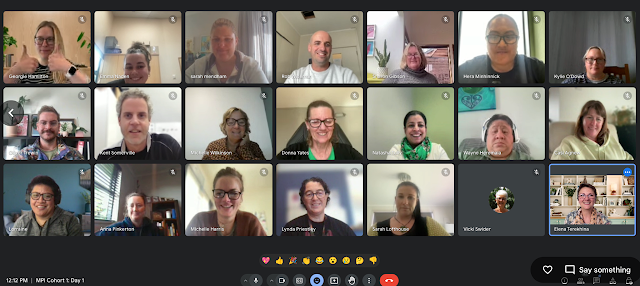
The inaugural MPI Cohort 1 kicked off at the beginning of this term. We had two productive and intensive days full of learning, reflections and 'aha' moments.
Sign up for the MPI 2025,  as spots are filling up quickly. 


We have a diverse range of participants in the program, each finding their own areas to enhance their teaching of mathematics... Check out their blogs

"...This is exactly why I wanted to go on MPI. My strengths are in my content knowledge, as well as my own mathematics ability. However I needed to know how to strengthen my own understanding of current pedagogy, and in turn, hopefully, this will help with my planning of maths."

...how to use the PAT maths data to inform the next learning steps for the learners. This will be very useful for us as it is clear and easy to understand what the next steps are for the students. We will be able to use these and offer them in our workshops to extend and progress learning."

"One of my big take-aways is the fact that I am being delivered all of this research based material and I can pick and choose as to what will suit me and my class at this point.  Speaking of which, how fantastic do these slides look?  I am very keen to be working towards my planning for my students to be as enticing and interesting as the examples that we are having shared with us."


Friday, 8 March 2024

Thinking of my TAI 2024: Focusing on Mathematics!

I will continue to improve my teaching practice and support other teachers in enhancing their teaching of mathematics. While participating in the pilot MPI, my main inquiry focus will remain on developing teacher pedagogical and content knowledge to ensure the effectiveness of their maths programmes. Additionally, I aim to promote critical thinking in both students and educators to achieve the best outcomes.

Here is the Causal Chain that I developed last year and am continuing to implement this year. It helps keep me on track and has received positive feedback from my COL colleagues and leaders.


Friday, 23 February 2024

Insights from the initial MPI Pilot Sessions

I'm excited to share some snippets of the new Maths Practice Intensive (MPI) that we're piloting this term and that will be launched for the first cohort from term 2.

Day #1. We began by looking at the pillars of practice - the integral components of the effective maths programme. 

We also highlighted the importance of fostering a positive learning environment for maths, nurturing creativity and integrating cross-curricular opportunities for real-life application. Exploring the concept of teachers seeing themselves as mathematicians, we recognised that this perspective can lead to a transformative shift in our approach to designing our maths programmes and opening the door to a more dynamic and engaging teaching style. This shift can instil confidence in both teachers and students, promoting the belief that everyone has the potential to excel in maths.

Day #2. We explored a range of formal and informal assessments to fully understand the available tools and practical implementation of Assessment for Learning (AFL). We practised analysing PAT and e-asttle data and engaged in coaching conversations about how to use this data wisely. The emphasis on sharing assessment data with students and incorporating self-assessment tools in our teaching was also discussed. The program encourages us to reflect on how often we allow and prompt students to reflect on their learning and whether we are tapping into their self-driven learning potential (student empowerment).

Day #3 was all about practical aspects: long and short-term overviews, timetabling, flexible grouping, lesson planning, and organising for group discussions (group talk). It was great to give it a go and solve a 'low floor high ceiling' problem ourselves in breakout spaces, followed by sharing with the big group. This activity will be useful for teachers' learning as it encourages thinking about their own mathematical knowledge, ideas, gaps, next steps, and resources they might need for the lesson, etc. I loved that Fiona used Talk moves with us, letting us experience how our learners would feel and behave; "revoicing" definitely made me refocus on the group conversation. Another practical aspect of the programme is "gifting" well-designed and pre-planned task boards ready to be used in class. Finally, we shared some resources for independent activities that might enhance students' learning experiences and help develop fluency.

To conclude, I'd like to emphasise that every part of the programme is designed with robust evidence in mind and backed up by research. Throughout the programme, teachers will be referred to relevant readings to deepen their pedagogical knowledge and better understand why the offered approach is effective.


Monday, 12 February 2024

Across Schools COL Teacher 2024

 Kia Ora wonderful Manaiakalani educators

This year, I'm excited to continue collaborating with Kahui Ako teachers and sharing my knowledge and skills as an AS COL teacher. I'm particularly passionate about Maths and will be focusing on effective teaching practices in Mathematics across Y1–6However, I am always happy to support teachers with all of their questions across the curriculum. I can offer:

  • Working with you on developing and implementing a balanced classroom programme 
  • Developing student agency/ student empowerment. I'm happy to explain the approach we developed at GTS and support implementing it with your class.
  • Designing engaging LCS projects (integrated curriculum)
  • Unpacking curriculum progressions across the curriculum 
  • Planning lessons or units
  • Understanding and using various assessments (formative and summative)
  • Analysing assessment data and using it for planning
  • Selecting the best resources to teach different concepts in Maths
  • Co-teaching, observing, feedback and modelling
  • Number Talk and the use of various manipulatives and digital tools in maths
  • Creating multi-modal sites 
  • Support with your movie for the Film Festival

I truly look forward to collaborating with you to create engaging learning opportunities for our tamariki and to help them achieve their full potential.

I'm available to work with teachers during their class and release time. This term, I am part of the MPI (Maths Programme Intensive) pilot program on Thursdays but available every Friday. 


Wednesday, 6 December 2023

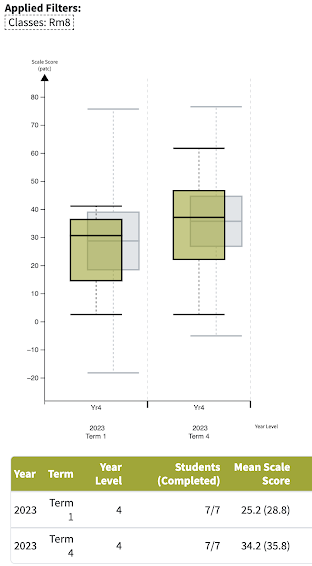
End-of-Year Progress Data for My Year 3-4 Class: Maths, Reading and Writing

In this blog post, I'd like to share the end-of-year data for my Year 3-4 class. 

All results have been filtered to include only the 'same students,' ensuring a direct 'apples-to-apples' comparison of progress.

1. Mathematics Term 1- 4 PAT data

2. Reading comprehension Term 1- 4 PAT data

Year 4 (same students only) achieved a gain of 9 units, (=1.3 years of progress)

. 3. Writing Term 1- 4 OTJ (supported by e-asttle) 

Thursday, 16 November 2023

Improving Teacher Practice and Accelerating Student Learning in Mathematics (TAI 2023 presentation at Burst & Bubbles)

Since 2021, my inquiry focus has been on improving teacher practice and raising student achievement  in Mathematics. Over the past years, the Maths achievement data has been consistently concerning across many Manaiakalani schools at all year levels. Furthermore, the issue of students underperforming in math has captured national attention.

At the start of the year, I discovered that almost 90% of our new Y3 students were working below and well below their expected levels in mathematics. Their Term 1 PAT results confirmed the data I collected during other summative and formative assessments. This group of students became my target group, or I prefer to call them my control group, as I always strive to deliver the best teaching to all students. 

After analysing the school-wide T1 PAT results, I engaged in several professional conversations with my school leaders and teachers. We decided to adopt a more data-informed approach and redesigned and restructured our maths programmes across all year levels. We ensured a well-rounded focus on both Number and Strand, employing an integrated curriculum and fostering student agency.

I’ve been actively involved in supporting my school and other COL teachers by working on understanding various assessments, analyzing and using data for more effective planning. 

I've supported a number of teachers and teams by discussing and collaboratively reviewing their maths programmes, by selecting the best resources for teaching different concepts, compiling and sharing practical resources, for example, maths-integrated Matariki resources for L1 to 4 of the curriculum, by observing lessons, providing feedback, unpacking it and planning next steps. 

To share my expertise and passion for this subject, I provided in-class support by both modeling and co-teaching maths lessons.

This year, I’ve had the privilege of working as part of the Maths design group, with the goal of launching a new maths PLD program next year. I've already volunteered to pilot this program in Term 1. I really hope that this new Manaiakalani initiative will support our teachers in growing their capability and love for teaching mathematics.

To conclude my presentation, I’d like to share the end-of-year Maths PAT results of my targeted Year 3 cohort (Y3 learners in my class achieved 18.6 gain).  We filtered the data analysis by "same students only" to compare apples to apples. The group achieved a gain of 17 points, compared to the national average of 9.2. This difference translates to nearly 2 years of progress and means that, with my team, we successfully accelerated their learning in Mathematics.


Sunday, 5 November 2023

AS COL support provided in 2023 (with a focus on Maths)

This year, I have been privileged to support and collaborate with the broader Manaikalani community to enhance teacher practice in Maths. This included working with individual teachers, teaching teams across Y1-8, COL colleagues, school and Kahui Ako leaders, and the Maths Design Group. I also provided support for our RTLB colleagues.

Here is a snapshot of my AS COL support:


Saturday, 21 October 2023

Team Feedback on Maths Programme and Team collaboration this year

This year, I've had the privilege of leading a team of five enthusiastic Y3-6 teachers. It has been an interesting and sometimes challenging experience with a lot of changes: we welcomed some new team members who felt more comfortable teaching literacy than maths. I heard them say, 'I am not a maths person,' multiple times. Furthermore, most of our team had to learn the curriculum for new year levels they hadn't taught before.

Thinking of the wisdom of the famous saying, "Tell me and I forget, teach me and I may remember, involve me and I learn," we involved our newbies in team planning. I believed that involvement and shared responsibility would be the keys to transforming their perception of teaching Math.

I have been always available to model, co-teach, observe, explain maths progressions and resources, help with assessments, etc. Two of my team members had never planned for Year 5-6 maths (Level 3). I supported them by initially planning for those stages at the beginning of the year, gradually passing these responsibilities to them as they developed more knowledge and confidence.

Throughout the year, I observed the need for a universal planning template. So, in Term 3, a new universal planning design emerged, simplifying the planning process and enhancing our teaching and providing consistent learning experiences across our classes. You can read about our planning here.

Last week, I collected feedback from my team, seeking their insights and perspectives on our collaboration, teacher capabilities in maths and areas for improvement as we always strive to provide the best for our learners. Some findings are below:

Did collaborative planning help you deepen your knowledge of the maths curriculum and better understand progressions (stages)?

Teacher #1: Yes- I think the strength comes from different perspectives and how everyone approached the planning of the math curriculum. Elena led the team effectively, ensuring each member knew which progression they were planning while always providing support. This helped us grow stronger in planning, understanding the Maths curriculum and progressions, and how to teach Maths effectively.

Teacher #2: Yes, with having to plan all different stages it deepened my knowledge of the progressions as well as the maths curriculum. I was able to look at what my team had planned which allowed me to have access to more resources. As I had come from teaching year 3 & 4 I had never planned stage 6-7 before which at the beginning of the year I found challenging. With Elena's support and using my team's planning, I was able to gain a deeper understanding of what these stages looked like for all different strands etc.

Teacher #3: I think for me personally (as a fairly inexperienced maths teacher), planning my own lessons has allowed me to deepen my understanding of individual stages one at a time. If I was to have planned for all stages at the same time, I would have likely become overwhelmed. I now feel more successful and confident in teaching maths.

Did team planning help you feel more comfortable and confident when teaching maths?

Teacher #1: Yes! I love that I can bounce ideas off from my colleagues and that I can ask for advice in a safe space. 

Teacher #2: I love the evolution of how the planning templates have developed. Elena was mindful to support her team (most of whom were relatively new to teaching) and as such the planning templates helped to scaffold understanding of concepts and delivery. Even for someone with experience like me, I found them so useful! 

Teacher #3: Absolutely. Now I feel so much more confident teaching maths, I really enjoy working with Elena, Team Kea and using our planning format.

Teacher #4:  Yes, it was great to use the same structured format and also have others' planning as an example when completing my own planning. 

What do you like about our collaborative maths planning and the changes that we made this year?

Teacher #1: As a newbie! I love it, it made planning ahead so much easier and you can find planning and tailor it to suit the needs of our kids. 

Teacher #2: At the beginning, when we started teaching from each other's plans, I found that different teachers’ plans varied to some extent and I found different planning layouts confusing. However after Elena suggested the new planning format and explained it to us, I better understood how to plan for a good maths programme. I loved our Term 4 strand planning idea, I found it extremely helpful having the resource bank of plans that we can use and to slot it into our own classroom programs when needed. 

Teacher #3: I love to plan on the slides, it’s interactive and it is visually appealing. It was great to have  same expectations across classes and maths stages. We also often reflect back on what worked well and what didn’t, which helps improve our maths planning and teaching (since we learn from our mistakes).

Teacher #4: I felt like the pressure of planning was reduced by a significant amount. I wasn't spending all weekend finding/ creating resources and lesson plans. Now with our planning, we are able to put more thought into our lessons and explicitly teach. I find that our learners are getting more out of each lesson and the design is easy for them and the teacher to follow. When I had my student teacher in class, she commented on how easy she found our template and how she found it easy to follow other teachers' planning. 

As a team, we also reflected on the implementation of Maths Matrices to empower our students. 
All of us witnessed the positive impact they've had on empowering our students and engaging our students' whanau. This experience has reinforced our commitment to continue using Maths Matrices next year and beyond.


Thursday, 28 September 2023

Monitoring the Effects: Term 3 e-asTTle Comparison Reports (Maths)

In this post, I'd like to share two e-asTTle comparison reports based on the latest assessment conducted in September by my Year 3 and 4 students. I have nine Year 4 students in my class but only two of them didn't sit this test due to their overall learning difficulties (they focus on their IEP goals). There is no e-asttle data available for Year 3 students from other schools.

Using the concept of repeated measures, I've been tracking my students' progress in maths and sharing their results with both them and their whanau. We looked at their individual reports to set up new goals and to see how far they've come and how much they've grown. It was a great opportunity for my learners to talk about their successes and next steps during our end of Term 3 Tamariki Korero. 

Report #1.  How are my students doing compared to students in ALL other NZ schools?

Report #2.  How are my students doing compared to students in SIMILAR schools (low decile)?

E-asTTle offers a range of individual and group reports that I've been using as formative and summative assessments to guide my students toward their learning success. Along with other assessments, I use e-asttle to keep a close eye on student progress and needs and to make teaching adjustments as needed. 

Next year, I will administer the same test at the beginning of Term 1 and then each term to collect data for e-asTTle progress reports and to compare them with PAT results (out of my personal curiosity).

Saturday, 16 September 2023

Optimising Maths Programme: a comprehensive Weekly and Daily Planning Approach.

As we're approaching the end of term 3, I'd like to share my team's innovative weekly and daily planning format, designed to make our maths program transparent to all stakeholders: teachers, relievers, students and whanau. Through collaborative efforts with my team, we've refined our approach to create engaging learning experiences that are visible, accessible, rewindable, practical and efficient. Explore our format, complete with built-in formative assessments and easily accessible teaching and  learning resources. Our planning promotes academic growth while enhancing teacher capability and subject knowledge, nurturing student agency and strengthening connections with whanau.

The structure of the weekly and daily planning has been working well for our year 3-6 classes. Students are seen twice a week with a flow of purposeful activities to practice new concepts and maintain their maths knowledge.

Built-in assessments. Using ARBS, ixl.com (but it can be any math program, including StudyLadder, Splash Maths, etc), book tasks and Figure Me Out activities, teachers are collecting rich evidence of student progress and identifying their next steps - built-in formative assessment for learning.

This structure also allows for visible, accessible and rewindable learning. From my own experience, the students who were absent from school used this planning to continue learning and work on the same topics as the students at school. I only had to do a couple of quick workshops to support them when they returned.

Revision and review. This planning helps to review and revisit the topics when students are working independently on their own maths goals (self-reflection and teacher feedback)

Reliever-friendly. Relievers were also able to pick up this plan and continue to teach according to the weekly plan with limited learning interruptions.

Whanau feedback is also positive. Parents have commented that they know exactly what the kids are learning, and, according to some parents, this format has helped them better understand their child's math education (which was an interesting comment).

Planning explained:


Thursday, 27 July 2023

Research Article: The Importance of Visual Mathematics for our Brain and Learning by Jo Boaler

This research paper caught my attention when I read a couple of the first paragraphs..."a common belief in education (is) that visual mathematics is for lower level work, and for struggling or younger students, and that students should only work visually as a prelude to more advanced or abstract mathematics. As Thomas West, author, states, there is a centuries-old belief that words and mathematical symbols are “for serious professionals – whereas pictures and diagrams” are “for the lay public and children” (2004).  This idea is an example of a damaging myth in education, and this paper will present compelling brain evidence to help dispel the myth". (Boaler, J., Chen, L., Williams, C., & Cordero, M. (2016). Seeing as Understanding: The Importance of Visual Mathematics for our Brain and Learning. Journal of Applied & Computational Mathematics 5)

The study highlights the brain's capacity to process mathematical concepts through visual pathways. From number lines to manipulatives, visual representations play a pivotal role in making abstract ideas concrete and understandable. Integrating these tools in the classroom enhances engagement and achievement across year levels.

The paper advocates for embracing visual mathematics as a means of transforming students' mathematical experiences. By providing hands-on experiences and visual aids, educators can empower learners to develop a deeper understanding and appreciation for math.

I believe (and was thrilled to find a confirmation of my beliefs in the latest neurobiological studies) that using hands-on objects and visual aids is incredibly important for learning math. These tools help make abstract concepts more concrete and easier to understand. When you can touch and see things, it's easier for your brain to remember and solve problems. Studies have shown that using these tools can make students better at maths and help them do well in school. Plus, they work well for all types and ages of learners. 

"A compelling and rather surprising example of the visual nature of mathematical activity in the brain comes from a new study on the ways that the brain uses representations of fingers, well beyond the time and age that people use their fingers to count. The different studies on the brain’s use of finger representations give fascinating insights into human learning and clear implications for mathematics classrooms."

I hope to see more manipulatives and visuals in our classrooms across all the year levels to enhance learning experiences, engage students and foster a deeper understanding of mathematical concepts. When we can touch and see things, maths becomes clearer and more exciting.


Wednesday, 19 July 2023

Free Digital Maths Games and Interactive Resources

Recently, I have been updating my collection of purposeful interactive websites for my learners. These websites offer free resources for different maths concept development and practice. Here are a few of my favourites:

Maths Games https://nz.mathgames.com/ is a fantastic free website offering interactive maths activities for primary students. It covers various topics, including number knowledge, strategies and strands. Additionally, the website provides video explanations that help students learn from their mistakes. While Math Games offers a premium option, there are still plenty of valuable resources available at no cost.

Mathantics https://mathantics.com/  is a collection of lessons created specifically for teaching math concepts through animated videos. These videos are visually appealing and easy for our young learners to understand. Not only can students benefit from watching these videos, but teachers can also use them to refresh their own understanding of a topic.

Maths Is Fun https://www.mathsisfun.com/ (Free with a subscription option) is a user-friendly website that offers interactive games, puzzles and explanations of math concepts. These resources can be used as a modelling tool for Number Talks or guided lessons. 

BBC Bitesize  - https://www.bbc.co.uk/bitesize/subjects/z826n39 (free) provides a diverse collection of interactive math games and activities suitable for primary students. While some resources are available for the UK only, the website still offers great content for New Zealand classrooms, including a variety of free basic facts games.

By incorporating these interactive websites into your classroom program, particularly during independent purposeful practice, teachers can effectively enhance students' math skills while keeping them engaged and motivated.

Have fun learning and teaching maths!


Wednesday, 21 June 2023

Maths in Matariki

Matariki is coming! This special time of the year is not only about cultural celebrations but also offers an incredible opportunity to weave Maths into teaching and learning. From exploring symmetrical patterns in Māori art to analyzing data related to Matariki traditions, we can engage our students in a fun and meaningful learning experience. So, let's embrace the spirit of Matariki and embark on an exciting journey of integrated maths learning together!

Here is a LINK to some wonderful Matariki lessons on nzmaths. It covers levels 1- 4 of the NZC and provides a lot of ideas for cross-strand and integrated units. 

I highly recommend exploring these great resources as they contain excellent lessons and ideas for teaching and learning various maths knowledge and skills in a relevant practical context.

Happy teaching and learning during and about MATARIKI!


https://nzmaths.co.nz/search?keys=Matariki


Thursday, 25 May 2023

Literature review #2 - Transfer of Learning by R. Haskell

 Haskell, Robert. Transfer of Learning.


One of my hunches regarding the poor PAT results of our students was that we may not necessarily teach what is being tested. I shared my thoughts on the difference between "teaching to the test" versus teaching the specific math areas that students will be assessed on. I searched the web for any relevant research but couldn't find anything particularly useful until I came across "Transfer of Learning" by Robert Haskell.

Dr. Robert E. Haskell was a Professor of psychology at the University of New England (passes away in 2010), whose work in the area of learning transfer spans a range of disciplines, including math, science, education, business, and psychology.

Haskell's insightful book, 'Transfer of Learning: Cognition, Instruction, and Reasoning,' explores the interesting topic of how we can effectively apply our knowledge in diverse contexts. By exploring the historical roots of transfer and underscoring the importance of building a solid knowledge foundation, Haskell convincingly argues for the significance of explicit teaching and practice. emphasizes the importance of understanding key concepts, strategies, and declarative knowledge in facilitating successful knowledge transfer. The book provides valuable insights on fostering critical thinking and problem-solving skills in students, empowering them to apply their learning to real-world situations.

Just in case, I'd like to explain that declarative knowledge in math involves knowing and understanding the key ideas and concepts that form the foundation of mathematical thinking and problem-solving. It is like the building blocks of learning, providing a solid foundation for further learning, deeper understanding and the ability to apply what you know.

In conclusion, Haskell's work aligns with my belief about the importance of teaching before testing. By emphasizing the need for a strong knowledge base and providing students with explicit instruction, educators can empower students to transfer their learning effectively. Teaching before testing ensures that students have the necessary understanding and skills to approach assessments with confidence. By incorporating Haskell's insights into our teaching practices, we can create a solid foundation for students' academic success and foster their ability to apply their knowledge in real-world contexts.

Thursday, 18 May 2023

Literature review #1 - Visible Learning by J. Hattie

John Hattie is a Professor of Education and Director of the Visible Learning Labs, University of Auckland, New Zealand and we all know his famous work "Visible Learning. A Synthesis of Over 800 Meta-Analyses Relating to Achievement" first published in 2009. 

I decided to reread his book, especially some parts that I found important for my teaching inquiry this year. According to J Hattie, "The effect size of 0.40 sets a level where the effects of innovation enhance achievement in such a way that we can notice real-world differences, and this should be a benchmark of such real-world change." 

This is a great reminder to all of us that our inquiry into improving our teaching practice, commitment to numerous PLDs, and our aim to develop student agency are vital components in fostering positive student outcomes in mathematics. By focusing on refining the curriculum and our instructional skills as teachers, and prioritizing student engagement and empowerment, we have the potential to make a profound impact on students' mathematical understanding and achievement. 

This research also provides valuable insights into instructional strategies that yield positive results for student learning. When it comes to teaching math, a well-structured program and direct teacher instruction have been found highly effective factors (Hiebert & Grouws, 2007).  Explicit teaching, clear explanations, and demonstrations have a significant impact on student understanding and achievement.

Manipulatives play a crucial role in the early years of mathematics education and show a great effect when working with low-achieving middle school students. They provide concrete experiences that help students build a solid foundation and develop a deep understanding of mathematical concepts (Mitchell, 1987). By engaging students in hands-on activities, manipulatives foster conceptual understanding and lay the groundwork for later abstract thinking.

When it comes to effective teaching strategies, certain approaches have shown particularly promising outcomes. Strategy-based methods, guided practice, peer tutoring, teacher modeling, specific forms of feedback, mastery criteria, sequencing examples, and instruction responsive to feedback have demonstrated high effect sizes (Hattie, 2009). These strategies actively engage students, provide guidance, and create opportunities for practice and feedback, leading to significant improvements in mathematics achievement.

On the other hand, research suggests that peer group strategies and independent practice with technology have relatively lower effect sizes (Hattie, 2009). While they still have some value, working within a peer group and relying heavily on technology for independent practice may not yield as substantial improvements in mathematics learning compared to other approaches.  (I have personally observed similar situations where students collaborate on their independent activities, and despite my reminders that they should only help by explaining rather than telling, it can be challenging to monitor.)

Reading "Visible Learning" by J. Hattie confirmed my hunch and hypotheses about the most important and effective components of teaching mathematics:

  • Structured mathematics programs: Comprehensive and organized curricula that provide a framework for effective instruction and learning in mathematics.
  • Direct Teacher instruction and modelling: Engaging students through clear explanations, demonstrations, and guidance from the teacher to deepen their understanding of mathematical concepts.
  • Strategy-based methods: Teaching students specific problem-solving strategies and approaches to empower them in tackling mathematical tasks effectively.
  • Guided practice and feedback: Providing students with opportunities to apply their knowledge through practice activities while receiving targeted feedback to enhance their learning and mastery of mathematical skills.

Citations:

Hiebert, J., & Grouws, D. A. (2007). The effects of classroom mathematics teaching on students' learning. In F. K. Lester Jr. (Ed.), Second Handbook of Research on Mathematics Teaching and Learning (Vol. 2, pp. 371-404). Information Age Publishing.

Mitchell, M. M. (1987). The effects of manipulative materials in mathematics instruction. Journal for Research in Mathematics Education, 18(6), 449-457.

Hattie, J. (2009). Visible Learning: A Synthesis of Over 800 Meta-Analyses Relating to Achievement. Routledge.

Thursday, 27 April 2023

Food for Thought or Just One PAT Question Analysed

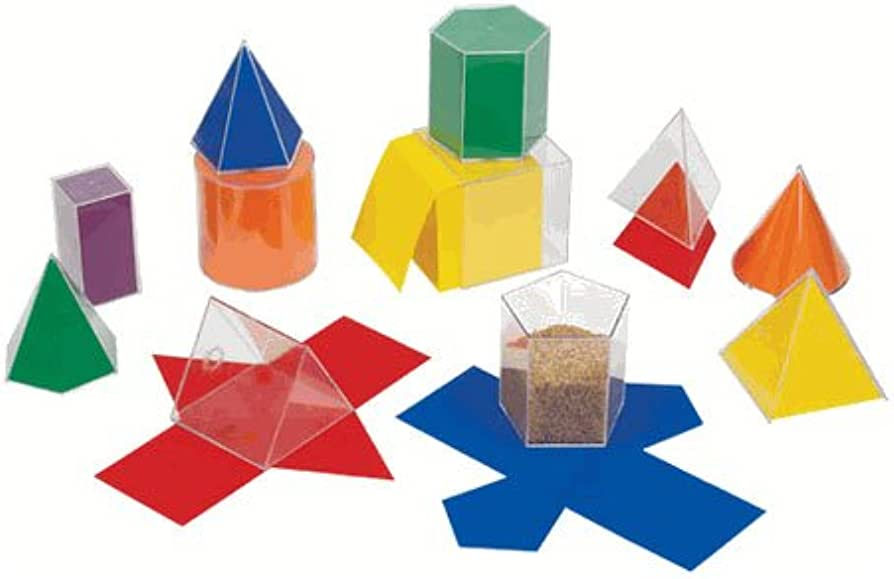
After publishing my post about PATs areas that we test on without teaching, I recalled and decided to share a story about my last year Y4 student who scored Stanine 9 in PAT but struggled with one particular question - "Visualise which shape a net will fold to make." 

At that time, I was placing an order to buy more maths resources for our school including a set of 3D folding shapes, which we used with our Year 3-4 classes. I wanted to provide our students with a hands-on way to explore and visualize 3D shapes and their nets. Little did I know that this tool would have a significant impact on their learning, even a year after using it. Surely, you can fold 3D shapes using paper, but we had an opportunity to purchase this maths equipment and students loved it!

Out of curiosity, I looked at random Y4 and Y5 classes to find out their answers to this particular PAT question for the past 3 years.

2020 - Term 4


2021 - Term 4

2022 - Term 1

2022 - Term 4 -  our Team excelled in the PAT "visualise a shape" question that had previously stumped many of Year 4 and 5 students.

2023 Term 1 (after the summer break, mostly the same students with some new intakes)

"Visualize which shape a net will fold to make." This question could be challenging for some students because of a specific skill we often do not cover in our maths programme. 

As seen from the examples above, after using the folding shapes in our team, students were able to visualize the 3D shapes and their nets with ease. They were able to apply their knowledge to the PAT assessment and, in Term 4 2022 for the first time in three years, most of Team Kea's students answered the question correctly. Furthermore, the majority of learners retained their knowledge after a summer break (this is not clean data as we have a number of new students from other schools and teams).

This set of data highlights the importance of analyzing assessment data to identify areas where our students need explicit teaching or additional support. 


Wednesday, 26 April 2023

Tools, Measures & Approaches

Describe the tools/measures/approaches you plan to use to get a more detailed and accurate profile of students’ learning in relation to that challenge. Justify why you chose these approaches and tools.

Recently, I had the opportunity to analyze PAT assessments from our school and discovered some concerning learning gaps among our students. Many students struggled with questions that were not covered in our classroom maths programmes or were only briefly covered (based on my personal, team and other teachers' reflections)

If students have never been exposed to specific maths concepts or skills, expecting them to answer questions on those topics is not fair. In fact, testing students on material they have not been taught is not only unfair, but it is also not an accurate reflection of their true understanding of the maths curriculum.

The PAT exams are designed to assess a student's understanding of the broader maths curriculum, but this does not mean that students should be expected to answer questions on topics not taught in class. 

I used the 'individual items' report for all our classes and identified similarities in topics that most students struggled with: Statistics, Geometry, Measurements, Fractions and Algebra. Some examples are below:

                                                                    Year 5:                                                                          


Year 8:
Year 4:

On the other hand, I also analysed which areas of Maths we delivered effectively. This is just a great illustration of "what we taught - our students learnt!" We just need to review our maths programme and include the areas that we neglected before.

                                                                     Year 4:                                                                            

Year 5

A hypothesis I developed was that our current maths programme was not adequately covering all the topics included in the PAT assessments. To create a rich picture with a high degree of reliability and specificity, I plan to create an e-asttle test including all the areas tested in PATs. Gloss data also will be used to support Number knowledge and strategies results. 

Along with these 3 tests, I will collect student voice. I already interviewed a few students after their PATs and discovered that many of them experienced frustration due to their lack of knowledge on certain topics. Formative assessment is ongoing.

At the same time, we need to ensure that we're not simply teaching to the test. Our goal should be to provide our students with a well-rounded understanding of the subject. This means incorporating a variety of teaching strategies, including hands-on activities, real-world applications and opportunities for critical thinking and problem-solving. Teaching Measurements, Geometry and Statistics can be part of the integrated curriculum - our LCS pedagogy. 

I shared my findings with my school's teachers and senior team. My purpose was to highlight the importance of using assessment data for planning. 

I will continue with my inquiry about helping teachers understand the value of using assessment data effectively to create a culture of data-driven instruction in my school and hopefully the wider Manaiakalani Kāhui Ako.  I truly believe that this can lead to improved student outcomes and a more effective and meaningful learning experience for both teachers and students.