Showing posts with label LReflect. Show all posts

Friday, 8 March 2024

Thinking of my TAI 2024: Focusing on Mathematics!

I will continue to improve my teaching practice and support other teachers in enhancing their teaching of mathematics. While participating in the pilot MPI, my main inquiry focus will remain on developing teacher pedagogical and content knowledge to ensure the effectiveness of their maths programmes. Additionally, I aim to promote critical thinking in both students and educators to achieve the best outcomes.

Here is the Causal Chain that I developed last year and am continuing to implement this year. It helps keep me on track and has received positive feedback from my COL colleagues and leaders.


Thursday, 27 April 2023

Food for Thought or Just One PAT Question Analysed

After publishing my post about PATs areas that we test on without teaching, I recalled and decided to share a story about my last year Y4 student who scored Stanine 9 in PAT but struggled with one particular question - "Visualise which shape a net will fold to make." 

At that time, I was placing an order to buy more maths resources for our school including a set of 3D folding shapes, which we used with our Year 3-4 classes. I wanted to provide our students with a hands-on way to explore and visualize 3D shapes and their nets. Little did I know that this tool would have a significant impact on their learning, even a year after using it. Surely, you can fold 3D shapes using paper, but we had an opportunity to purchase this maths equipment and students loved it!

Out of curiosity, I looked at random Y4 and Y5 classes to find out their answers to this particular PAT question for the past 3 years.

2020 - Term 4


2021 - Term 4

2022 - Term 1

2022 - Term 4 -  our Team excelled in the PAT "visualise a shape" question that had previously stumped many of Year 4 and 5 students.

2023 Term 1 (after the summer break, mostly the same students with some new intakes)

"Visualize which shape a net will fold to make." This question could be challenging for some students because of a specific skill we often do not cover in our maths programme. 

As seen from the examples above, after using the folding shapes in our team, students were able to visualize the 3D shapes and their nets with ease. They were able to apply their knowledge to the PAT assessment and, in Term 4 2022 for the first time in three years, most of Team Kea's students answered the question correctly. Furthermore, the majority of learners retained their knowledge after a summer break (this is not clean data as we have a number of new students from other schools and teams).

This set of data highlights the importance of analyzing assessment data to identify areas where our students need explicit teaching or additional support. 


Wednesday, 26 April 2023

Tools, Measures & Approaches

Describe the tools/measures/approaches you plan to use to get a more detailed and accurate profile of students’ learning in relation to that challenge. Justify why you chose these approaches and tools.

Recently, I had the opportunity to analyze PAT assessments from our school and discovered some concerning learning gaps among our students. Many students struggled with questions that were not covered in our classroom maths programmes or were only briefly covered (based on my personal, team and other teachers' reflections)

If students have never been exposed to specific maths concepts or skills, expecting them to answer questions on those topics is not fair. In fact, testing students on material they have not been taught is not only unfair, but it is also not an accurate reflection of their true understanding of the maths curriculum.

The PAT exams are designed to assess a student's understanding of the broader maths curriculum, but this does not mean that students should be expected to answer questions on topics not taught in class. 

I used the 'individual items' report for all our classes and identified similarities in topics that most students struggled with: Statistics, Geometry, Measurements, Fractions and Algebra. Some examples are below:

                                                                    Year 5:                                                                          


Year 8:
Year 4:

On the other hand, I also analysed which areas of Maths we delivered effectively. This is just a great illustration of "what we taught - our students learnt!" We just need to review our maths programme and include the areas that we neglected before.

                                                                     Year 4:                                                                            

Year 5

A hypothesis I developed was that our current maths programme was not adequately covering all the topics included in the PAT assessments. To create a rich picture with a high degree of reliability and specificity, I plan to create an e-asttle test including all the areas tested in PATs. Gloss data also will be used to support Number knowledge and strategies results. 

Along with these 3 tests, I will collect student voice. I already interviewed a few students after their PATs and discovered that many of them experienced frustration due to their lack of knowledge on certain topics. Formative assessment is ongoing.

At the same time, we need to ensure that we're not simply teaching to the test. Our goal should be to provide our students with a well-rounded understanding of the subject. This means incorporating a variety of teaching strategies, including hands-on activities, real-world applications and opportunities for critical thinking and problem-solving. Teaching Measurements, Geometry and Statistics can be part of the integrated curriculum - our LCS pedagogy. 

I shared my findings with my school's teachers and senior team. My purpose was to highlight the importance of using assessment data for planning. 

I will continue with my inquiry about helping teachers understand the value of using assessment data effectively to create a culture of data-driven instruction in my school and hopefully the wider Manaiakalani Kāhui Ako.  I truly believe that this can lead to improved student outcomes and a more effective and meaningful learning experience for both teachers and students.

Wednesday, 15 March 2023

My 2023 TAI - focus on Mathematics!

Thinking of my 2023 inquiry focus. I observed my team’s new Y3 students and discovered that about 90% of this cohort is working below and well below their expected levels in mathematics. Their PATs confirmed the data I collected during formative assessments. I believe that this is a result of previous years of disrupted learning.  The current Y3 students missed out on timely development of very crucial fundamental skills and knowledge as young students were very hard to reach and keep engaged during lockdowns and hybrid learning. When they returned to school, the main focus was on developing positive attitudes towards school and love of learning. 


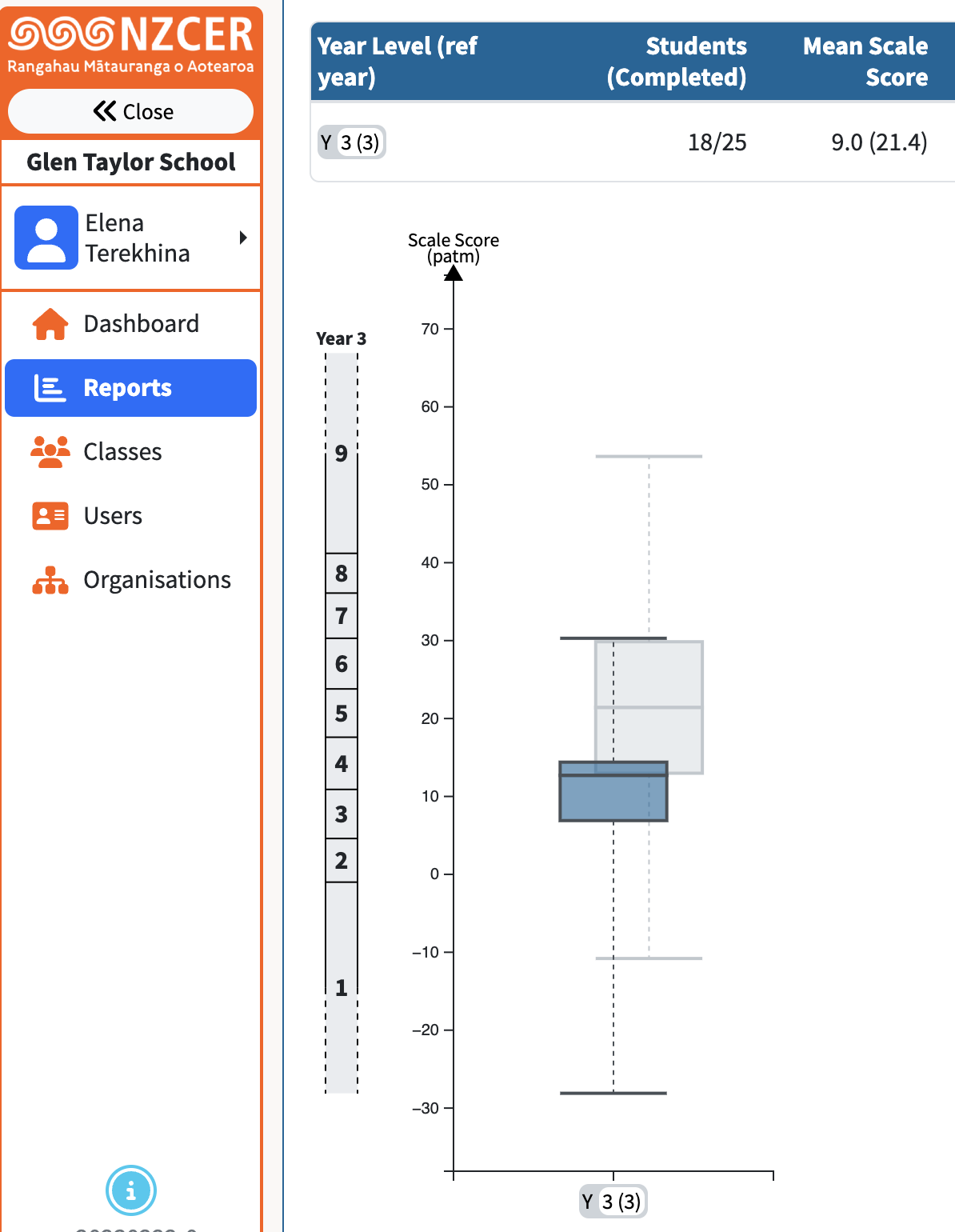
PAT Y3 2023 Term 1 data


Wednesday, 21 September 2022

Student Agency Readings - LCS and the integrated curriculum

Student inquiry is a teacher-supported process that provides a structure for students to learn through the process of inquiring into questions they develop themselves about a topic or concept. There are various models of student inquiry and I reviewed and reflected on a number of different models.

Interesting Points

The LCS approach to learning is based on the belief that students are powerful learners who must be actively engaged in the process of investigating, processing, organising, synthesising, refining and extending their knowledge within a topic. They also are able to work collaboratively and develop their key competencies while working on their LCS projects.

Teachers have to provide a clear structure and share their expectations of student learning. To make this process purposeful and enjoyable, teachers have to put a lot of effort into planning and collecting student voice.

Another interesting point that resonated with my view of the LCS process is the use of an integrated curriculum. Such an approach gives students a real purpose for learning and provides real-life experiences which in order help students see the world as a complex system rather than a number of separated topics. "The coherence principle states that “the curriculum offers all students a broad education that makes links within and across learning areas”

(Ministry of Education, 2007, p. 9, emphasis added)

The LCS (or inquiry) learning supports the development of students' critical thinking.

Concerns I have from within the reading

From my own experience, I know that LCS requires a high level of organisation, flexibility and negotiation skills to challenge the range of diverse learners. It requires a lot of careful planning and structured delivery. LCS can be messy and noisy due to the students' enthusiasm and drive.

My concern is mostly about inquiry learning in the ILE. Teachers have to be on the same page with their expectations and standards and have a high level of trust between them and learners.

New learning from this reading

It was interesting to read about different models and approaches to inquiry learning. Different schools and teachers use different models that suit them, their beliefs and their learners. It was great to see various rubrics for teachers to measure the quality of inquiry learning and outcomes. We used some of these ideas when working on the Team Kea LCS model.

What excites and enthuses me from this reading?

I personally love the integrated learning and LCS approach as I see these as great opportunities for students to learn in an authentic context, not to mention their enthusiasm and motivation! I believe that the LCS approach takes students beyond what they already know and supports the development of important lifelong skills and key competencies.

Reflection

The more knowledge we have about inquiry learning, the better our common understanding of all aspects of LCS becomes. I actually was excited to see that my team's understandings of the LCS process are pretty similar. I believe this is a result of our close teamwork and collaboration.

Thinking about my learners, I believe that during inquiry learning, peer learning becomes as effective as teacher-led learning. Some meaningful “aha!” moments often come in authentic interactions with other students. Sometimes, during the LCS projects, the class transforms into a space where everyone can try different roles: a teacher, a facilitator, a leader, an IT guru etc and has something to share! Inquiry-based learning triggers students' critical thinking and problem-solving capacities and pushes them to take action instead of learning passively.

It was great to have these readings done before and during our work on the Team Kea LCS model as we kept referring to different ideas and models and synthesized them into our own pilot LCS model that we are excited to implement in term 4.

Readings:

http://pjsibpyp.weebly.com/uploads/1/1/2/3/11231090/inquirymurdochwilson.pdf

http://pjsibpyp.weebly.com/uploads/1/1/2/3/11231090/kath_murdochs_inquiry_model.pdf  This has awesome components for students to know what they should be doing / working through that you can add to Learn, Create, Share

https://www.nzcer.org.nz/system/files/set2012_3_015.pdf  This reading is more of an academic read, but gives great information.


Sunday, 10 July 2022

Fluency Without Fear: Research Evidence on the Best Ways to Learn Math Facts By Jo Boaler

Fluency Without Fear: Research Evidence on the Best Ways to Learn Math Facts by Jo Boaler (2015)

Found a few years ago during my ALiM work, I keep referring back to this article and  https://www.youcubed.org/ website. This work is about developing number sense instead of memorization of facts, it unpacks the idea of learning math facts along with a deep understanding of numbers and the ways they relate to each other.

In a critical research project, researchers studied students as they solved number problems (Gray & Tall, 1994). The researchers concluded that low achievers are often low achievers not because they know less but because they don’t use numbers flexibly – they have been set on the wrong path, often from an early age, of trying to memorize methods instead of interacting with numbers flexibly (Boaler, 2009). 

Based on my experience, some teachers want their students to drill in basic facts and times tables as this is 'a good old school that worked well in the past'. Saying that we don't really have any research data to support this statement. I remember a lot of my classmates who hated maths because they didn't understand it or had to sit timed tests. I was one of them and I didn't enjoy that 'good old school' approach. 

I believe that the current decline in student achievement in maths is caused by a lack of maintenance or an unbalanced or inconsistent maths programme. 

  • Do we all have a solid maths block every day four or five times a week? 
  • Do our students practise and apply the knowledge and concepts taught in class or just do some busy work during their independent activities? 
  • How can they develop fluency without mileage and purposefully created and provided opportunities? 
According to the NZC,  'number' should be the focus of 60–80 percent of mathematics teaching time during the first four years at school and 50-70 percent afterwards. 

Here comes a common misunderstanding or misconception. The curriculum requires a lot of time teaching 'number', but modern research talks about reasoning. The answer is simple. The 'old school' is about memorizing facts while the modern school is about developing fluency through making sense and connections, and talking about reasons for the use of different methods. Students need to learn to calculate through number sense, as well as spend time on problem-solving and reasoning. 

One of the great methods for teaching number sense and math facts at the same time is a teaching strategy called ‘number talks’ that many of us have been implementing already. Research tells us that the best mathematics classrooms are those in which students learn number facts and number sense through engaging activities that focus on mathematical understanding rather than rote memorization. (Jo Boaler)

At the end of her article, Jo compiled some great and engaging activities that can be used in any classroom to support your tamariki number sense development. 


Sunday, 27 March 2022

Refining my Inquiry Focus - Team Collaboration and Student Engagement

Over the past 2 months, my Team and I experienced many changes in our teaching approach and pedagogy. I would say, that we naturally started to collaborate in order to address new challenges of hybrid learning and the transition of students returning back to school after lockdowns and isolations. 


As a team, we are heading into a new era of collaborative planning, teaching and learning, and it looks and feels exciting. During my TAI, I want to understand how collaboration can support and better our classroom practice and also our professional well-being. We are at the beginning of our collaborative journey as we have to develop a common understanding of what effective collaboration looks like.

Does Teacher Collaboration improve student achievement and their learning experiences?

Does Teacher Collaboration improve the team's professional well-being?

I read an extract of an article about 'the outcomes of four Australian schools' efforts to promote greater collaboration between teachers in each school by Bruce Johnson: Teacher collaboration: good for some, not so good for others', and found it very interesting. 

"Collaborative ways of working helped most teachers feel better about themselves and their work and provided them with opportunities to learn from each other. However, a minority of teachers were negative about the new teaming arrangements claiming that the changes had led to an increase in their workloads, a loss of professional autonomy, and the emergence of damaging competition between teams for resources, recognition and power."

I definitely want to develop an effective team that is happy to collaborate without experiencing any of the above-stated negative situations. We already addressed the issue of the extra workload by having our daily and weekly reflections on our planning and teaching and developing a model of team planning that is clear for everyone and can be recycled over the next terms and years. We found out that having the planning schedule helped us scaffold our understanding of the NZC and learning progressions.

Monday, 28 February 2022

Thinking of my 2022 Inquiry

This week I have been thinking about the next steps for my teaching inquiry. Last year, I focused on accelerating our students' learning in Maths by implementing the best world education practices and working closely with my colleagues to achieve better results for our students.  The beginning of 2022 brought us a new reality - Hybrid learning. What can we do to make learning accessible to all of our students no matter where they are now. How can we get them connected, include them in our group and class learning and provide timely feedback? 

At this moment nobody knows how long this new covid reality will last, so the first steps will be:

  • create a team approach to deliver quality teaching and learning to all of our Year 3-4 tamariki
  • collaborate and cross-teach to improve students' learning experiences
  • collaborative planning to deepen my team's knowledge of learning progressions in all the NZC areas
  • provide opportunities for all the learners' in my team to stay connected with their peers and teachers
  • collect and analyse the first set of data to plan for learning


Thursday, 10 June 2021

Professional Reading to form a Hypothesis - #9

Principles to Actions: Ensuring Mathematical Success for All 

Eight High-Leverage Instructional Practices

• Establish mathematics goals to focus learning

• Implement tasks that promote reasoning and problem solving

• Use and connect mathematical representations

• Facilitate meaningful mathematical discourse

• Pose purposeful questions

• Build procedural fluency from conceptual understanding

• Support productive struggle in learning mathematics

• Elicit and use evidence of student thinking

This read was unpacking specific teaching practices, that are essential for high-quality mathematics education for all students.

Reflecting on my teaching practice and learning from the article, I confirmed that implementing Talk Moves, Number Talk and Problem solving are powerful tools of an effective maths programme. Another example of the HLP is a balance of group and mixed ability teaching in various learning situations.

This read resonated with my belief in the importance to explicitly focus on developing a Growth mindset and changing students' negative beliefs about 'being bad in maths' and developing critical thinking and achievement across the curriculum.


Friday, 28 May 2021

Professional reading for Hypothesis Generation - #7

My inquiry is targeting progress not only in mathematics;
however, my class and school data show a strong need to address this issue.
Why the majority of our students are underachieving in maths, what can be done differently? 

To help me generate a hypothesis about aspects of teaching that might contribute to current patterns of learning, I referred to a number of professional reading and had a conversation with a cognition maths facilitator Rebecca Bishop.

This video episode is one of the Developing Mathematical Inquiry Communities lessons that I keep referring to.

The pedagogy is consistent with the findings of best evidence syntheses. The lesson shows the main components of the structured maths programme: a teacher-directed Launch, moves into Group Work followed by each group Sharing Back with the whole class. 

I try to implement all of these elements in my class maths programme too and found that it is very difficult to have a whole-class launch or Number Talk with my class as I have learners at Stage 5 and Stage 1-2. So I have to split the class into groups during the explicit teacher teaching time. For problem-solving, I often use Low floor - High ceiling problems so my students could participate and develop their confidence and creativity in maths.


Saturday, 3 April 2021

Data Collection and Analysis - #3

Data reveals serious historical issues that require to be addressed. Data screams for urgent actions!


Over 60% of my class are operating at the well-below and below the expected levels in both Reading and Maths. I traced back some of my students' data and found that for the past 2-3 years they always were well-below or below without showing an acceleration in any of the preceding years. As I'm still to finalise my target group for my inquiry, I consider narrowing my focus down and planning my inquiry around shifting these students' achievements in maths. 


At this point of my inquiry, I feel a bit nervous but also excited as I have to come up with something different from their previous learning experiences, reflect on my own practice and extend my teaching approaches and tools to accelerate these historically underachieving students.

Monday, 1 March 2021

PLD: Normalising Te Ao Māori in an English Medium Setting by Brenda McPherson

 If I was to summarise the key things I took away from this Professional Development what would they be and why?

Tokenism vs Normalisation of Te Ao Māori in NZ schools

Understand and recognise the unique status of Tangata Whenua in Aotearoa, NZ,

Understand and acknowledge the histories, heritages, languages and cultures of partners in the Tiriti of Waitangi

How has this professional development challenged my thinking?

Using Te Reo in class - what to do to create a new norm and why it's important.

My personal deeper understanding of NZ history and what 'being culturally responsive' means and delivering relevant content.

What aspects of my practice would I consider changing as a result of this professional development and why?

As a result of Brenda's PD sessions, I deeper understand and see more value in normalising the cultural kete. With a big focus on Identity, Acceptance and Belonging, I continue to intentionally implement the culturally responsive pedagogy by:

  • using Māori and other language phrases in class (examples: daily greetings, playing games using Maori phrases)
  • doing Karakia
  • As a Y3/4 syndicate, we went to Taurere (Mt Taylor) to experience our connections to local places. After that, we created our individual written and visual PepehaI have high expectations for my Maori and other Pasifika learners
  • We sing Waiata daily (we now have a bank of Māori waiata)
  • Class Displays - Pepeha, cultural Art, Aspects of the Treaty of Waitangi and its relation to our life in Rm 9 (Class Treaty)
  • A deeper understanding of the Treaty of Waitangi and NZ history by playing the Game of Land Trade and presenting our learning and thoughts at the school assembly.
  • Learning about NZ endemic animals, learning their proper Maori names and their meanings.
  • Connecting with my students' whanau and supporting them with learning and well-being (lockdowns, family situations, connecting them with a social worker, korero and talanoa time - not just set up by the school but ongoing)  

Monday, 2 November 2020

Comparing Reading data - Y2/3 (3 classes)

My students’ progress compared to two other Year 2/3 classes in my school. 
(Assessments used - Running Records Term 1 and 4).

Friday, 2 October 2020

My Change of Practice Reflections and Tweaks

In this post, I'd like to collate evidence of my change of practice and explain my reflections and tweaks that I have been making during this bumpy year.

A brief summary of my improvement change in a few words: Learn-Create-Share, student interests and a real purpose behind this process! 

My Reflections and Tweaks: I created a new habit of regularly asking myself a number of questions and collecting evidence to support my conclusions: 

  • How did the students respond to my new approach/strategy/ tool? 
  • What are their learning outcomes after implementing my changes - evidence of improvement? 
  • Are things better than when typical/traditional approaches/strategies/tools were used? 
  • What could be done differently to secure further learning gains or consolidate existing ones? 

2020 has been a very interrupted year and I had to adapt my teaching approaches and tools to the new learning environment. I've noticed that instead of narrowing down my focus, I had to be flexible and very responsive to my learners' interests and needs, especially during remote learning times. I tried a number of activities and I must admit that some of them didn't really resonate with my young learners when the others hugely motivated them. The students continued to work on those tasks even during their holidays! 

My students were absolutely excited to 'be heard' - at some stage I noticed that they took ownership of their learning, initiated learning and participated in work that had meaning to them and others. My target group consists of 6 boys and 2 girls and this approach helped me to turn them into passionate learners. 

My tweak during lockdown - creating an online class community using blogging and commenting tools. It was explicitly modelled and taught during the first days in lockdown. Soon, my learners began to share their experiences through their blogs and other students gave them feedback. I think that introducing and fostering peer-feedback was a big win as my learners got a real audience and timely responses to their posts. At the same time, it was a great opportunity to reinforce cybersmart learning. I continued this during in-class developing into a new norm amongst our Y2/3 learners.

What worked really well and is supported by evidence:

  • Blogging and commenting is not natural for some of the learners. How can we change this? Plan for it, allow time, motivate by purposeful and interesting tasks. Make their comments important! Create a culture of blogging and commenting. I believe that "Summer journey" is successful because of the feedback they get. 
  • Optional topics/ choices for writing keeping in mind that the lesson's WALT had to be covered.
  • Purposeful reading and writing tasks, e.g. creating their own games, trialling them, improving, presenting to other students to play. 
  • Student-created Kahoot quizzes - real purpose to read to learn, create, proofread and edit for clarity and share with other students across the school!
  • Implementing drama - my boys were enthusiastic and bursting with ideas, they did lots of reading and writing gave and received feedback, took risks, etc
  • Use of word problem-solving in Maths provided extra opportunities to practise their reading and writing skills, deepen their thinking and comprehension, apply these skills to solve real problems. Use of Maths vocabulary.
  • Effective questioning. I had to rethink my questions to make my learners think and understand topics deeper, make connections and, as a result, apply their new knowledge and skills to come up with a sophisticated answer.

These changes in my teaching resulted in student progress and improvement. Their engagement was easy to observe in-class, it was also video recorded (various class videos, online Google Meets, Manaiakalani Film Festival and other LCS projects)

End of Term 3 Data. As stated in the previous post, all my students have moved up their reading and writing levels despite two lockdowns and an interrupted in many other ways year.

Wednesday, 30 September 2020

Monitoring the Effects of My Intervention on Learner Outcomes

Identify informal and formal ways you are monitoring the effects of your changed practices/intervention on learner outcomes. Explain the reflections and tweaks you are making along the way.

My Inquiry: How can I change my practice to raise student achievement in literacy by promoting deep learning that requires students to develop cognitive engagement and critical thinking across the curriculum using Learn-Create-Share?

My interventions:

  • Putting my students at the very centre of their learning and making their learning experiences authentic by designing LCS projects based on their interests and taking into account their identities.
  • Scaffolding my learners during their projects by implementing and consistently using the tasks designed to improve their vocabulary, reading comprehension and writing skills.
  • Utilizing drama to develop cognitive engagement and critical thinking and raise students achievement in reading and writing.
Monitoring the Effect:
  • Student voice (evidence of their hight engagement and positive attitude towards learning -  collected through their blog posts, in-class & online conversations and sticky post-it notes in Term 3. In Term 4 the students will be asked to complete the same google form they did in Term 1 to compare the results/ changes)
  • Photos, Videos, their Reading and Writing examples, online and in-class observations - evidence of my students' learning and progress (formative assessments):
    • numerous LCS projects
    • blogging and commenting, peer and teacher feedback
    • maths word problems - incorporating Reading and Writing to gain a deeper understanding and new vocab
    • Teaching of making inferences in a fun and engaging way: inferring from a picture, riddles and other activities - genuine interest, high motivation, critical thinking, etc 
    • Introducing new vocab through topics of their interest and creating situations where they have opportunities to use their new vocab (Kahoot quizzes - students created, Film making, scriptwriting experiences,  use of S.Cameron and L.Dempsey activities)
    • Drama (lots of reading and writing, problem-solving and KC) - Films for the Manaiakalani FF 2020 will be available on our class blog in T4.
  • End of Term 3 data: Running Records and writing samples. All of my Year 3 target students moved up their reading and writing levels despite two lockdowns. All of them are now working at the expected after 3 years at school levels. I look forward to continuing with my inquiry next term and seeing my students' successes.

Monday, 28 September 2020

Boys in Literacy - Professional Development with Marshall Diggs

If I was to summarise the key things I took away from this Professional Development what would they be and why?

Marshall's inspiring presentation was aiming to empower teachers to understand boys as learners and equip them with skills and strategies to enable boys to achieve and succeed in literacy and in their learning in general. As we know every child is different but boys do learn differently to girls, and it was great to listen to his ideas and reflect on my own practice. These are some of the points I found most interesting:

  • Being CLEAR means being KIND to the boys
  • Competition gets them excited
  • Boys learn best with short and sharp exercises (active games, PE breaks, brain breaks, etc)
  • Who are their male role models? Do they see men writing for fun?
  • Are there spaces where boys like to learn?
  • What topics do they prefer to read about? What will engage them?
  • Be firm, fair and fun
  • How much talking is happening in a lesson? More reading/writing, less talking (teacher talk)
  • Relationships with our students is a priority
  • Learning is more important than the result
  • Align the curriculum with the child and put the child at the centre.
How has this professional development challenged my thinking?

I haven't changed my thinking, this PLD just confirmed that the use of the LCS pedagogy helps empower my male students to succeed in their learning. This year, I was impressed by the enthusiasm and engagement shown by the boys during our LCS projects. I'm very glad that I managed to involve more junior syndicate teachers in our LCS projects and see our boys' growing engagement and love of learning!

What aspects of my practice would I consider changing as a result of this professional development and why?

There are some pretty amazing things happening in our school but we can always be reflective and look at ways of improving. My plan is to have this conversation during our next team meeting and develop a plan to support our male learners:

  • introduce short breaks and include them in our daily planning: 

- Word association game (president = Trump, Fruit = orange etc.)
- Give a fist pump to 4 people/elbow bump, touch 4 walls, find 4 green objects, etc
- Ninja punctuation activity: Capital letters - fist pump, Full stops - turn, Comma - twist,     Number - signal, Paragraph - yee hah
- Summary (in 3 words). Turn to your buddy and tell him/her what are you going to do this holiday? Then the buddy has to summarise in 3 words. Other students are to guess:-)
- Catch hand/finger game (activate both hemispheres of the brain - brain exercises)
- Word scrabble: how many words can you make from this one word (give time frame).

  • Literacy - inspiring topics: Factual/ Competition/ Humour/ Survival/ Conflict/ Adventure
  • Shared reading - big books - align with their interest and our LCS Term 4 plan
  • S. Cameron and L.Dempsey activities
  • LCS project - our learners have to be active participants
  • Art - collect student voice! Differentiation.
  • Maths - problem-solving and hands-on learning vs drilling
  • Inclusiveness - identity and connections 
  • Digital curriculum and digital tools to support boys' learning/ engagement

Tuesday, 21 July 2020

The COVID period and its impact on my learners and inquiry.

Question: How has the Covid-19 period impacted the learners in your focus group? Will you need to make any changes to your Inquiry?

My focus students have shown consistent progress since T1 and that was assessed at the end of Term 2. I did Running records and other formative assessments including online and in-class observations. I also collected student voice about their distance learning experiences and literacy dispositions. 

For me, the COVID period was interesting for 2 reasons. First of all, it confirmed that the outcomes of my last year teaching inquiry and the tools I implemented are effective and help my students stay engaged and motivated. 
Secondly, my new teaching experiences and the structured Manaiakalani COL inquiry framework helped me shape my hypothesis and develop an intervention that I will start implementing this term. 

Before the COVID experience, I was thinking of a wider range of tools to accelerate my students in literacy; however, after referring to the research literature, analysing my own practice and my students’ voice, I decided to narrow my focus down to vocabulary and comprehension work.

Tomorrow, we’re having our reading PDL with Sheena Cameron and I hope it will help me to select the most effective strategies and tools that I could implement to support my inquiry.

Thursday, 16 July 2020

Inquiry into my current teaching and self-reflection

Over the past few months, I have been looking at and analyzing current dispositions, experiences and outcomes of my students and the ways of how I can improve my own practice to address their needs and help them achieve better results in reading and writing by keeping them engaged and motivated.
By this time I have learned a lot about my learners, and it is now time to inquiry into my own teaching and analyze my strengths and areas for improvement. Firstly, I made a plan what areas of my literacy teaching I should observe and then analyze in order to grow as a professional; this included self-observation, student voice, reviewing my teacher tools and the activities that I've been using.
Many of my students identified that they need to learn more words and their meanings in order to understand texts better. I conducted a short teaching experiment by feeding forward the specific topic vocab during our dragon learn-create-share project and then giving them comprehension tasks that contained the taught vocabulary. All of my students from the target group completed the task and were proud of their results because they felt confident in using the new words and that made them feel successful in their learning.
I also identified that many students will not admit that they don't understand some words unless you ask them. I began to clarify the meaning of those words that I guessed my Y2/3 students might not fully comprehend and it showed me how many words (common from my point of view) they don't know. We also discussed the importance of understanding all words and what strategies and resources can we use to figure out unknown vocabulary.
Based on my literature review, I confirmed for myself that my hypothesis is similar to the following statement: 'nine out of 10 Year 2 students whose decoding was fluent, but whose reading comprehension was inadequate, had a low vocabulary level' (Wagner and Meros).

My next steps: 
extend, improve existing and implement new vocabulary teaching tools.
continue to use explicit instructions in inferential strategies 

Friday, 19 June 2020

Professional Reading #2: Read about it : Scientific Evidence for Effective Teaching of Reading by Kerry Hempenstall


Major reviews of research on reading agree on the key components of effective reading programs:
  • Phonemic awareness: Knowledge of, and capacity to manipulate, the smallest distinct sounds (phonemes) in spoken words. 
  • Phonics: Learning and using the relationships between sounds and letter-symbols to sound out (decode) written words. 
  • Fluency: The ability to read accurately, quickly and expressively. Fluent readers are able to focus on reading for meaning. 
  • Vocabulary: The words children need to know in order to comprehend and communicate. Oral vocabulary is the words children recognise or use in listening and speaking. Reading vocabulary is the words children recognise or use in reading and writing. 
  • Comprehension: Extracting and constructing meaning from written text using knowledge of words, concepts, facts, and ideas. 
The author unpacked every key element providing multiple sources of research behind each of them. I believe that our schools have been doing a lot of instructional teaching of decoding and fluent reading and we now need to explicitly target vocabulary and comprehension strategies at early levels.

Kerry Hempenstall quoted a number of researchers stating that 'vocabulary has significant corpus of research. Hairrell, Rupley, and Simmons documented six reviews and two meta-analyses published between 1998 and 2009.168 The findings across age groups from preschool through to Year 12 highlighted how important was early vocabulary knowledge and hence instruction to academic success.'

Most of our students arrive at school still operating at the 3-year-old level of language development and they definitely require supplemental intervention in addition to classroom-based vocabulary instruction in order to make desired progress. As stated in the article, in a study by O’Connor, Bocian, Beebe-Frankenberger, and Linklater, intervention at the beginning of school produced far better outcomes than did intervening later in that first year.

This reading confirmed my hypothesis sharing the research findings and emphasising 'that a multiple strategy approach is necessary for vocabulary building. The features highlighted are direct instruction/explicit teaching, guided instruction, multiple encounters of the same words in varying contexts, working with a partner or small group, story retelling, use of props or concrete objects, comprehension and vocabulary discussion, and ensuring vocabulary instruction is embedded in all
curriculum areas.'

The author explored a number of research papers, summarised and explained the proven effective teaching instructions that have been effective for teaching vocabulary and comprehension. He also compared two approaches to teaching reading: explicit vs discovery.  'There is a strong body of research supportive of a
systematic, explicit approach generally, but particularly when it involves learning of new concepts and operations, and also for students who struggle with learning. By contrast, approaches that are student-led, systematic, and rely largely on personal discovery have not been supported by evidence.' 

I found his literature review very interesting and it resonates with my hypothesis that using DATs and explicit teaching of the 5 key elements of reading will accelerate our learners. I will definitely use this review when planning (or improving) my reading programme.


Friday, 29 May 2020

Profiling: understanding the nature of my students’ learning strengths and needs in detail

There is a complex of factors that influence student's learning. Getting to know your students is extremely both for their well-being and academic achievements. 
The more we understand our students, the more efficient we can ensure their learning successes. When we have an in-depth understanding of how our students learn, there is a major impact on diagnosing student needs and planning effective programmes and supports. 

I combined the data gathered during in-class learning in Term 1 and the formative data collected during distance learning ('Covid-19 data'). 

During the lockdown, I experienced a new opportunity to look inside our learners' lives and observe them learning from home, observe their learning styles, reveal their personal interests, motivation and key competencies. Interestingly, I enjoyed a very high level of engagement in comparison to similar junior classes in my school. I believe that one of the factors that contributed to this success was a love of learning and self-motivation of my learners that we have been developing together during in-class learning.  Another factor was the use of personalised tasks that helped to keep my students engaged and motivated. Effective learning takes place when the amount of task structure by the teacher matches a student's level of development. 

My 2020 inquiry is about raising student achievement in literacy by promoting deep learning that requires students to develop cognitive engagement and critical thinking across the curriculum. I decided not to change my inquiry focus. After the lockdown and distance teaching I witnessed and confirmed for myself that understanding of learner identities is not just important but crucial for effective teaching and learning. 

Pre-Covid data: 
I analyzed results of the beginning of Term 1 Running record in reading and e-asttle in writing and found that most of my Year 2 students are well below the expected levels both in reading and writing. My year 3 students are placed at different levels, however, all of them require to focus on reading comprehension, vocabulary and spelling. 


I looked closely at the RR and identified that while my Year 2's need to work on decoding and comprehension skills, my Year 3's students mostly require to focus on making inferences and improving their evaluation skills.
The e-asttle writing data and their independent writing exemplars also suggested focusing on ideas, vocabulary and spelling.
All of these findings helped me to identify and prioritize 3 main areas for developing my teaching intervention: general knowledge, vocabulary(meaning and wordbuilding) and spelling (phonics, H-F and word building).

Formative "Covid-19 data".
Formative data collected during distance learning also showed that my students have limited general knowledge of various topics. Based on various reports from Reading eggs, Sunshine classics, Kahoot topic games and completed tasks on Seesaw, I found that my students need to work on their inferential skills and vocabulary. Distance learning proved that taking into account their learner identities (e.g. personal identities, cultural and social backgrounds, academic performance and learning preferences) helps improve motivation and enhance students' learning outcomes.

My next steps:
- collecting student voice: their literacy dispositions, interests and self-evaluation in reading and writing.
- finding related literacy research
- making my hypothesis