Thursday, 16 March 2023

Sharing Success – Strengthening Student Achievement in Maths with Minimal Summer Drop Due to Solid Learning!

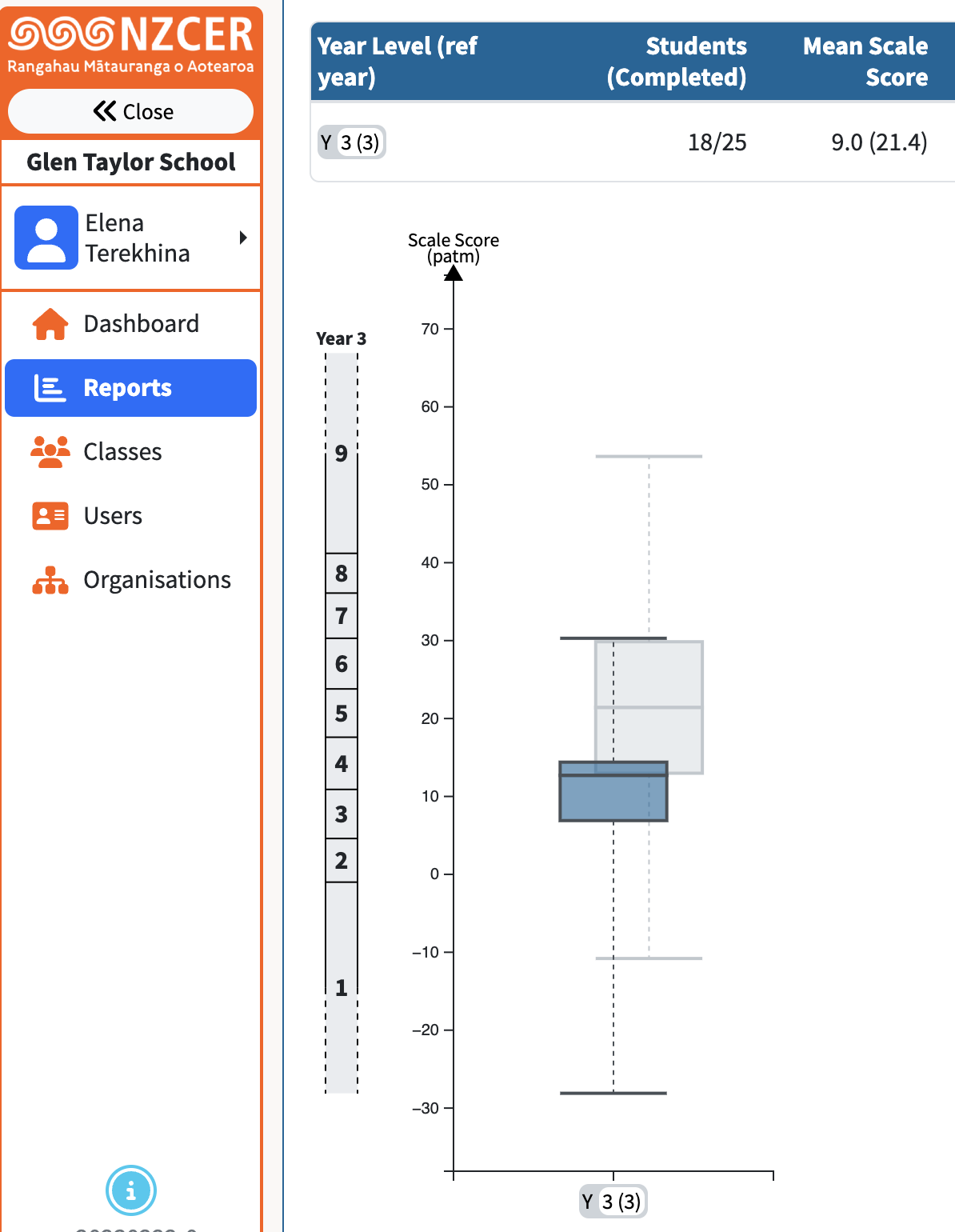
Sharing success! We love Mathematics! Starting in 2021, my inquiry into improving teacher practice and student achievement in Mathematics led to our whole school's goal for 2022-2023. We have been working hard to set our tamariki up for success and enjoyment in their maths learning! Evaluating my team’s “progress over time” T1 2022 - T1 2023 PAT data, I was excited to see good progress and not a significant 'summer drop' for our last year's Y3-4 learners. This data proves that our collaborative team and school inquiry worked for this group of learners, and I look forward to building on our achievement this year! (Note: *These students were also affected by the covid years!).

Then I referred to another set of data available on Ed Potential for our school. We can clearly see some great progress over the past years amongst Y4-6 students which confirms that our collaborative approach was effective.

I am excited to see this data and continue with my inquiry into improving teaching and learning of mathematics this year!


Wednesday, 15 March 2023

My 2023 TAI - focus on Mathematics!

Thinking of my 2023 inquiry focus. I observed my team’s new Y3 students and discovered that about 90% of this cohort is working below and well below their expected levels in mathematics. Their PATs confirmed the data I collected during formative assessments. I believe that this is a result of previous years of disrupted learning.  The current Y3 students missed out on timely development of very crucial fundamental skills and knowledge as young students were very hard to reach and keep engaged during lockdowns and hybrid learning. When they returned to school, the main focus was on developing positive attitudes towards school and love of learning. 


PAT Y3 2023 Term 1 data


Some Cool Maths Activities to try with your class

In this post, I'd like to focus on some activities that develop number fluency without blind memorisation and drill. I often refer to Jo Boaler's article 'Fluency Without Fear: Research Evidence on the Best Ways to Learn Math Facts' to remind myself about the importance of engaging maths activities instead of boring memorisation. 

Here are some simple activities that develop number knowledge fluency and mathematical reasoning skills in a fun and engaging way. Kids LOVE them!

Game#1


Activity #2 - Low Floor High Ceiling

Activity #3 - Low Floor High Ceiling 

What is the tallest Robot Monster that you can make using one head, one body and one set of legs? 

What is the shortest one you can make using one head, one body and one set of legs?

How tall would the Robot Monster be that was made from the three bits left over after you had made the tallest and the shortest?

How many Robot Monsters which are all different heights can you make with the nine pieces (all with one head, one body and one set of legs)?https://nrich.maths.org/2404


Activity #4 - Maths language and communication, active learning


Wednesday, 1 March 2023

I am passionate about improving teacher practice to raise student achievement and engagement in Mathematics!

Recently, I was asked by a few teachers to describe some main elements of Effective Mathematics Instruction. I reflected on my teacher practice and classroom programme, referred to the literature and identified the following main components of Effective mathematics instruction:

  • Developing positive norms: growth mindset, mistakes are great, productive struggle etc - developing positive mathematics learner identities.

  • Systematic and explicit teaching of new concepts

  • Use of different best-suited visual representations (manipulatives and/or digital tools)

  • Developing mathematical discourse and reasoning (Number talk using Talk moves, problem-solving)

  • Problem-solving in flexible learning environments: groups, mixed-ability, pairs or individual work 

  • Teacher and peer feedback 

  • Creating opportunities and allowing time for deliberate practice in order to develop students’ ability to transfer their knowledge and skills and be able to apply them in different contexts

  • Student agency - teaching students to use choice boards and maths matrices to set up maths goals, self-reflect and practise

  • Integrated maths activities, developing creativity in maths


This list might be overwhelming for some teachers, especially if they are at the beginning of their educational journey. Let's start with 3 steps:


1. I suggest beginning with establishing positive norms and developing positive mathematical identities. Why? Because your learners have to feel confident to make mistakes and learn from them - mistakes are part of maths! Here is a great website to teach your students about Growth Mindset: https://ideas.classdojo.com/b/growth-mindset


2. Plan at least 1 hour for learning Maths every day four or five times a week. Maths is better to learn in the 1st or 2nd block; however, you can still do some integrated activities in the afternoon (measurements, tesselations, etc)


3. Use various manipulatives and visual representations to teach mathematics. Use digital tools to make maths visual.


Remember, “The journey of a thousand miles begins with one step”. I wish you all the best on your teaching journey! 


Wednesday, 15 February 2023

Across Schools Teacher. Welcome to 2023!

Kia Ora, I’m Elena Terekhina, a Year 3-4 teacher at Glen Taylor School. I’m also a Year 3-6 team leader. 

Over the past years, I inquired into different aspects of my own teacher practice and effectively supported colleagues within my school and wider Manaiakalani Kahui Ako in the following areas:


  • Maths (developing an effective classroom programme)

  • Reading (T-shaped literacy and high-leverage practices)

  • Integrated Curriculum and LCS)

  • Student critical thinking and cognitive engagement

  • Student agency 

  • Teacher collaboration 


To see more details about my inquiries, please visit my professional blog.

In 2021, I shared my practice via Class onAir; one of my episodes was used for the Reading Practice Intensive Programme along with my team’s choice board. I always participated in Manaiakalani LCS cluster meetings and ran some workshops.


This year, I’m excited to share my knowledge and skills as an across schools teacher. I’m especially passionate about Maths but can support teachers with all their questions, inquiries and needs by: 

  • Developing balanced classroom programmes

  • Planning

  • Developing student agency

  • Designing engaging LCS projects (integrated curriculum)

  • Curriculum progressions

  • Understanding and using various assessments

  • Analysing assessment data and using it for planning

  • Selecting the best resources to teach different concepts 

  • Co-teaching, observing, giving feedback and modelling

  • Number Talk and the use of various manipulatives and digital tools in maths

  • Creating multi-modal sites

  • Support with your movie for the Film Festival

  • 😁😁😁


Please feel free to reach out for support or ask questions. I really look forward to working together to help our students achieve their full potential.


                     Team Site 2023             Class onAir   
 Team Site 2022 

Thursday, 17 November 2022

Team Feedback on Collaboration and Its Impact on Raising Student Achievement in Maths

As part of the evaluation of my 2022 inquiry, I collected teacher voice asking them to reflect on our collaborative journey this year: 

Did collaborative planning help you deepen your MATHS curriculum knowledge and better understand progressions (stages)? 

Yes, with having to plan all different stages it deepened my knowledge of the progressions as well as the curriculum. I was able to look at what my team had planned which allowed me to have access to more resources. Before we started collaboratively planning I noticed that I was planning too high for stages 2-3, now I understand the level that they are at and can see a big shift in their progress. 

- Definitely! I am an experienced teacher, who knows how to teach. However, as an overseas teacher, I struggled to understand the different stages and especially how to plan for each stage (and how to know when the students should move on to the next stage)....

Did team planning help you feel more comfortable and confident teaching Maths?

Absolutely. Now I feel so much more confident teaching maths, I really enjoy it. It took me some time to get used to teaching off others' plans. But once we spoke about using the same template that helped a lot more. 

The best thing about this whole experience was that I never felt judged, criticized or as a failed teacher. I loved that I could bounce ideas off from my colleagues, that I was able to ask for advice in a safe space and that I was mentored. 

Did using different maths manipulatives help you teach and your students learn Maths concepts better?

- Using different math manipulatives and hands-on activities gave my students more of an understanding of different concepts. I will never teach without manipulatives now. It also makes the students more engaged with their learning. I find that my students are actually excited to learn about maths now and really enjoy it! 

- Do you feel that you can scaffold your students' learning? What helped you achieve this?

- Yes, I feel like my students are able to get the correct teaching and guidance to improve in maths. As I have more content knowledge from the collaborative planning I am able to recognise my students' strengths and weaknesses and improve/ build on them. 

- Yes, it is incorporated in our plans. Instead of doing a massive lesson about a new concept, we break it up into smaller chunks and give them time to practice the new skill or concept. Once they are familiar and confident we move on to the next part/phase of the concept. 

What do you like about our collaborative planning and the changes that we made this year? What can be improved next year?

- We often reflect back on what worked well and what didn’t, which improved our planning and teaching (since we learn from our mistakes). Open communication in the team has been KEY (this is extremely important when planning and working together). I have learned so much from my two colleagues. Due to the fact that we have different teaching styles and different personalities, my own teaching practice has improved. I love that we are comfortable to ask each other for advice, that we can support each other and help each other grow. I honestly felt like we shared the load and that I was never alone... He waka eke noa.

- I think now that we have a solid template it will be great to look over these again and reflect on what works well and what doesn't.  Also reflecting and adding different activities to our choice board to keep this interesting. 

Enhancing Teacher Practice and Accelerating Student Learning in Mathematics (TAI 2022 presentation at Burst & Bubbles)

My 2022 inquiry started at the end of last year when I noticed more discrepancies in Maths achievement data in different classes compared to Reading and Writing results. What could I do to reduce variability in teaching maths and accelerate student learning? I came up with my inquiry question: “Will developing teacher collaboration improve teacher practice, increase student engagement and raise achievement in mathematics” 


During the profiling phase, I used student voice from different classes, formative and summative assessments, lesson observations and had professional conversations with teachers. I noticed that many teachers felt more comfortable teaching literacy than Mathematics.  I wanted to effectively support teachers to build their confidence in maths. I was hoping to employ teacher collaboration to design and deliver an effective maths programme across our year 3-4 classes.


Interestingly, team teaching during hybrid learning at the beginning of the year helped with my inquiry as provided multiple opportunities for my team to collaborate. We improved our professional relationships by developing team trust, establishing shared values and goals and setting up high expectations within our team.  Having open conversations about teaching maths helped me identify areas for improvement. We worked together to unpack the principles of effective pedagogy in Mathematics, develop solid subject knowledge and effectively use manipulatives, visuals and technology. 


Last year, my inquiry was about the implementation of High leverage practices in mathematics and I managed to accelerate my students’ learning despite the lockdowns. I was excited to share my expertise and passion for teaching maths with my team. I’ve been helping my colleagues with understanding various assessments, analysing maths data and using it for planning, selecting the best resources to teach different concepts, observing, giving feedback,  and modelling maths lessons. Collectively, we designed a new team planning format to make sure that students in our classes were getting the same high-quality consistent programme delivered every day. Eventually, my team developed a habit of ongoing collective reflections on our practice constantly refining our programme and problem-solving. 

As a result of my team's commitment and productive collaboration, our students have been empowered through a structured, accessible and rewindable maths programme. We all noticed a great shift in student engagement and teacher confidence. Our students love maths and this resulted in their good progress which is evident from our assessment data.